Professional CNC machining service provider in China
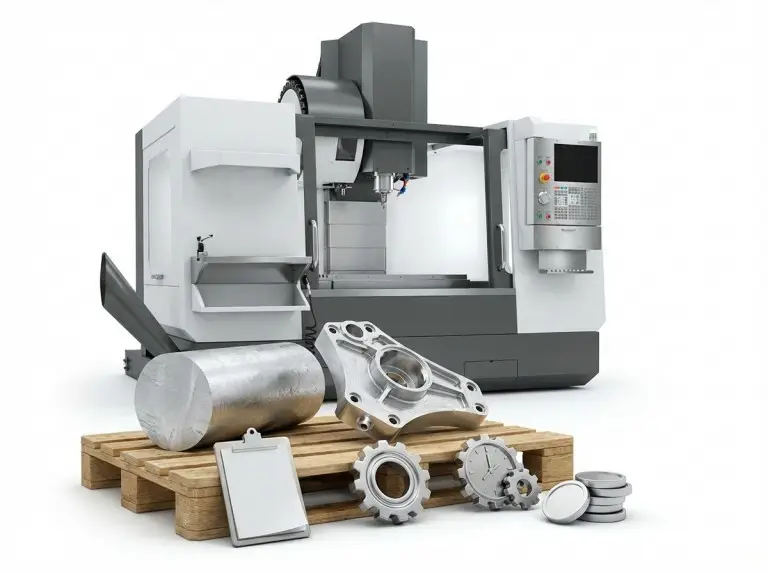
Professional CNC machining service provider in China, from prototyping to mass production of parts. We deliver exactly what you design and offer factory prices for your CNC parts.
Yonglihao Machinery is a reliable cnc machining company. Our China factory is equipped with professional turning/milling equipment with tolerances as low as ±0.1 mm. In addition to CNC machining, we also offer metal stamping,complementary services. to meet different machining needs. Whether you have a simple design or a complex design, we have the machining equipment to meet your machining needs. Upon custom request, we can also provide hole reaming and grinding processes. If you need a reliable supplier who can deliver plastic and metal parts quickly. Then Yonglihao Machinery is your reliable partner.
We have provided rapid prototyping as well as low and high volume machining to several customers for a variety of parts needs in the Aerospace/Automotive/Medical/Robotics industries. Below is a selection of CNC prototypes and finished parts we’ve made for our clients.
We can provide CNC machining services for over 50 metals and plastics, including but not limited to.
Metal
Plastics
Aluminium
Brass
Copper
Stainless Steel
Alloy Steel
Mild Steel
Aluminium
Aluminium is a lightweight metal with good strength, electrical conductivity and rust resistance. This makes it great for industries like aerospace, automotive, electronics, construction, and packaging.
Grades
6061 Aluminium alloy: Good strength and corrosion resistance. Suitable for applications where these qualities are important.
7075 Aluminium alloy: A high strength alloy, mainly used in aerospace applications. Its corrosion resistance is slightly lower than 6061.
2024 Aluminium alloy: Known for its fatigue resistance, mainly used for aircraft parts and fasteners.
5052 Aluminium alloy: Good corrosion resistance and easy to weld. Commonly used in ships and chemical equipment.
3003 Aluminium alloy: easy to form, but low strength. Commonly used for storage tanks and pipes.
Brass is strong, easy to machine and corrosion resistant. It is ideal for CNC machining and can be used to make many mechanical parts and decorative items.
Grades
C260: Made from approximately 70% copper and 30% zinc, it is strong and easy to machine. Commonly used for stamped parts, screws and nuts.
C360: This grade has a higher lead content and is ideal for CNC machining. Often used to make high-precision parts for automated machines.
Copper has excellent electrical and thermal conductivity and is an ideal processing material for electrical, electronic, construction, and refrigeration equipment.
Grades
C110: Made of 99.9% copper, it has excellent electrical conductivity. It’s ideal for electrical parts, wires, contacts, and heat exchangers.
C101: This grade has even more copper than C110, offering better conductivity for high-performance electrical and electronic uses.
C122: Contains a small amount of beryllium, giving it high strength and flexibility. It’s great for springs, connectors, wear parts, and molds due to its corrosion and fatigue resistance.
C17500/C17510: These alloys have better electrical conductivity and fatigue resistance. They are strong and often used to make welding electrodes and springs for electrical switches.
Stainless steel offers excellent corrosion resistance and strength, as well as aesthetic appeal, making it ideal for processing medical devices, food processing equipment, aerospace parts, chemical equipment and architectural finishes.
Grades
304 Stainless Steel: Good rust resistance and easy to process. Widely used in kitchen equipment, building decoration and chemical equipment.
316 Stainless Steel: Provides better rust resistance, especially in salt-containing environments. It is well suited for marine equipment, chemical containers and components exposed to highly corrosive environments.
303 Stainless Steel: Easier to work with than 304, it is ideal for parts that need to be machined quickly, such as screws, bolts and valve components.
430 Stainless Steel: Good corrosion resistance and magnetic properties. Commonly used for electrical components, decorative materials and automotive trim.
410 Stainless Steel: Known for its hardness and wear resistance, but with lower corrosion resistance. It is ideal for knives, bearings and valves.
17-4PH Stainless Steel: Very strong and corrosion resistant, ideal for high strength parts in aerospace, chemical and marine applications.
Mild steel is easy to machine, weld and form, while being strong enough to meet many structural needs. It is widely used in the engineering, automotive and construction industries.
Grades
A36 steel: easy to weld and machine, commonly used in building structures and bridges.
1018 Steel: Strong and easy to machine, commonly used for bolts, shafts, pins and screws.
1045 Steel: Higher strength and hardness, suitable for parts that require hardness, such as gears, shafts and couplings.
ABS is a popular plastic in CNC machining because of its strength and ease of machining. It is commonly used for prototyping, automotive parts, and consumer products.
POM is widely used in CNC machining because of its high strength, low friction, and dimensional stability. It’s commonly used for gears, bearings, and other machine parts.
PC is widely used in CNC machining because of its impact and heat resistance. It is commonly used to make protective covers, optical parts, and industrial equipment.
PEEK is a high-performance plastic known for its excellent heat and chemical resistance. It is commonly used for parts in aerospace, medical devices, and high-temperature environments.
PE materials are often used in CNC machining to manufacture corrosion-resistant parts, sliding parts and low-cost prototypes such as pipe fittings, containers and mechanical gaskets due to their good chemical stability, low friction coefficient and easy processing.
Conventional colours: white, black, natural color (translucent or milky white)
PMMA is known for its high transparency, excellent optical properties and good weather resistance. It is widely used in CNC machining to manufacture display racks, lampshades, optical lenses and decorative panels.
Conventional colours: transparent, black, white, color (customizable)
Find customised materials:These are our standard material options. If you can’t find what you’re looking for, feel free to contact our CNC machining experts for personalized material suggestions.
In addition to our expert CNC machining services, Yonglihao Machinery also offers a variety of surface finishing options to meet both your cosmetic and functional requirements.
As machined(Ra 3.2μm / Ra 126μin)
Workpieces are left with natural tool marks and roughness. Ideal for applications that do not require a special look or additional machining.
Smooth Machining (Ra 1.6μm / Ra 63μin)
Higher accuracy and smoother surfaces for precision machinery, optical instruments and medical device parts.
Polished (Ra 0.8μm / Ra 32μin)
Smooth and shiny polished surfaces for decorative parts, medical devices and high precision equipment.
Bead Blasting
Cleaning and polishing of the surface to achieve a matt and smooth effect.
Sandblast + Type III Anodised (Hard Coat)
After sandblasting and polishing, the parts are anodised to obtain a thick coating with high abrasion resistance, increasing hardness and durability, especially for aluminium parts that require extra strength.
Bead Blasting + Anodising Type II
The surface is bead blasted to a matt finish and then anodised for better corrosion and abrasion resistance. Available in various colours, commonly used for aluminium parts.
Black Oxide
A black coating applied to steel and stainless steel to prevent corrosion and improve appearance. Commonly used for automotive, mechanical and decorative parts.
Powder Coat
A robust, wear-resistant coating applied by electrostatic spraying. Available in glossy and matt colours, it is similar to paint and is used on furniture, metal products and automotive parts.
Chromate Conversion Coating
Adds a protective layer to aluminium or zinc alloys to improve corrosion resistance and electrical conductivity. Used in aerospace, electronics and automotive parts.
Electroplating
Plating a thin layer of metal to improve corrosion resistance, abrasion resistance or electrical conductivity, and to improve appearance.
Brushed
Adds texture to the surface of a metal part to give it a metallic feel. Commonly used in household appliances and decoration.
Tumbling
A process that smooths parts by using abrasives to remove burrs and sharp edges, improving surface finish
Our CNC machines deliver precision tolerances that meet or exceed industry standards, ensuring consistent accuracy and seamless integration of parts. With advanced equipment and strict quality control, we achieve tolerances as tight as ±0.1 mm for precision applications for precision applications, tailored to your specifications.
Features
Description
Maximum Part Size
CNC Milling: Up to 80 x 48 x 24 inches (2,032 x 1,219 x 610 mm) for 3-axis/5-axis milling, or 157.5 x 59.1 x 23.6 inches (4,000 x 1,500 x 600 mm) for large-scale setups.
CNC Turning: Up to 62 inches (1,575 mm) in length and 32 inches (813 mm) in diameter, or 7.9 x 19.7 inches (200 x 500 mm) for precision turning.
Minimum Part Size
CNC Milling: 0.2 x 0.2 x 0.2 inches (5 x 5 x 5 mm).
CNC Turning: 0.08 x 0.08 inches (2 x 2 mm). Custom fixturing may be required for micro parts.
Surface Roughness: Ra 0.8 achievable with post-processing.
Geometric Tolerances: Verticality, parallelism, and concentricity down to 0.1 mm for precision setups.
Precision Tolerances
Tighter than ±0.1 mm achievable for metals and select materials per drawing specifications and GD&T annotations. Subject to part geometry and material (e.g., plastics may require wider tolerances).
Minimum Feature Size
0.08 inches (2 mm). Smaller features possible depending on part geometry and material (e.g., metals support finer details than plastics like PE).
Minimum Wall Thickness
0.02 inches (0.5 mm). Thicker walls recommended for plastics (e.g., PE) to prevent deformation.
Minimum End Mill Size
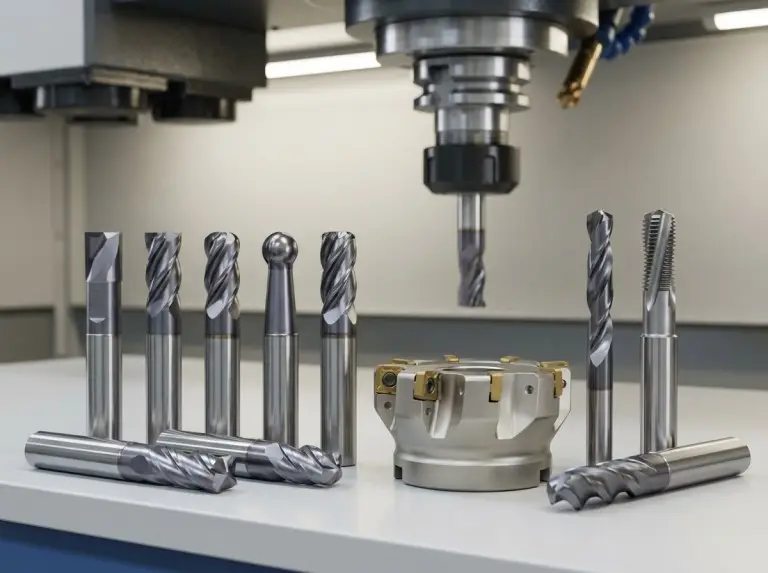
0.02 inches (0.5 mm). Suitable for micro-milling applications with high-precision tools.
Minimum Drill Size
0.01 inches (0.3 mm) for metals; 0.04 inches (1 mm) recommended for plastics and general applications. Deep-hole drilling may require larger diameters.
Minimum Diameter
0.01 inches (0.3 mm). Achievable for small pins or holes in metals with precision tooling.
Production Volume
Prototyping: 1–100 pieces.
Low Volume: 101–10,000 pieces.
High Volume: Above 10,001 pieces. Tighter tolerances may impact high-volume lead times.
Lead Time
5 business days for most projects. Simple parts can be delivered in as little as 1 business day, subject to design complexity and material availability.
CNC Machining Design Guide
Optimize your designs for manufacturability with Yonglihao Machinery’s helpful guidelines. Our experts provide feedback on your custom machined parts to ensure the best results in CNC machining.
Feature
Description
Radii
Internal corners naturally form rounded corners (radii).
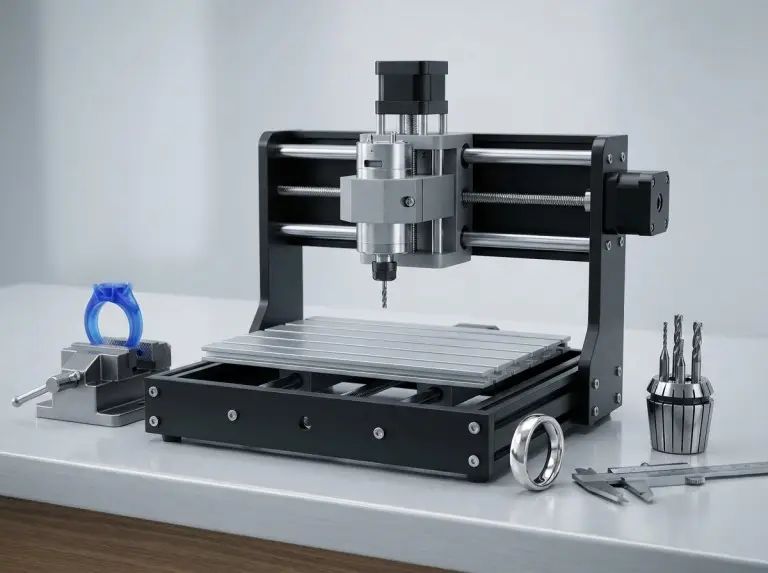
CNC machining is a process in which a computer controls a cutting tool to machine metal or plastic. This method uses pre-set codes to handle complex cutting tasks, making precise parts with less human error. At Yonglihao Machinery, we use the latest CNC technology to manufacture a wide range of precision parts.
We offer 3-, 4- and 5-axis mills and lathes to meet different design requirements. Our process ensures accuracy, repeatability, and efficiency, so each part is high quality and reliable. We work with more than 50 materials, such as aluminium, stainless steel, alloy steel and copper, and offer more than 60 surface finishes for corrosion resistance, aesthetics and durability.
High-Precision Control: Computer-controlled machining ensures high accuracy, improving both efficiency and quality.
Consistent and Fast Production: CNC technology makes it easy to mass-produce parts with consistent quality, saving time.
Flexibility: Design changes are simple, and one machine can handle multiple types of machining.
Handles Complex Geometry: CNC is perfect for complex shapes like curves, holes, and slots, making it great for intricate parts.
Automation: Automated processes reduce human errors and the need for constant supervision.
High Material Utilization: CNC machining minimizes material waste through efficient cutting, making the most of the material used.
Complex Geometries: Delicate or complicated designs are harder to machine and need special toolpaths.
Material Constraints: Hard or brittle materials can wear down tools and reduce accuracy.
Machining Tolerance Control: Keeping tight tolerances for high-precision parts is difficult, especially in multi-axis machining.
Surface Quality and Balance: Fast machining can affect surface quality, so it’s important to balance speed and finish.
Tool Wear: Tools and equipment wear down, which can affect quality and raise maintenance costs.
Industries we serve
Over the past 14 years, we have served a wide range of industries including automotive/aerospace/medical with extensive design and manufacturing experience.
Accuracy: We provide +/- 0.004 inch (+/- 0.1 mm) high precision machining to ensure that parts meet strict design requirements.
Quality Assurance: ISO 9001:2015 certified, we provide SGS, RoHS and material certifications to ensure reliable quality at every stage of production.
Cost-effectiveness: Our efficient production process and cost control help customers save 30-50% of production cost.
Material Selection: We offer more than 50 materials covering metals and plastics to meet the processing needs of various industries.
Engineering support: Our engineering team provides you with technical support from design to production to ensure the smooth running of your project and optimise the production process.
Delivery time: Our company is located near Qingdao and close to the logistics port to ensure fast and on-time product delivery.
The starting price ranges from $60, depending on product complexity/lead time and quantity. There may be some deviation, so for accurate CNC machining costs, contact Yonglihao Machinery’s engineers. Provide detailed project information and design files. Our team will consider all factors and provide detailed quotes within 1 day.
The maximum part sizesdiffer based on the chosen material. The biggest sizes are for machined aluminum parts (6061 and 7075), as well as milled parts up to 80 x 48 x 24 (2,032 x 1,219 x 610 mm). Turned parts are available in lengths up to 62 inches (1,575 mm) and diameters up to 32 inches (813 mm). If you need larger dimensions, you can contact our engineers online.
We guarantee that all the parts we supply conform to ISO 2768. Machined metal parts conform to ISO 2768-m (medium) or ISO 2768-f (fine). Machined plastic parts comply with ISO 2768-m (medium). Depending on the customer’s needs, we are also able to realize even more demanding CNC tolerances down to ±0.1 mm.
Deburring and edge breaking are standard procedures for CNC parts machining. The surface finish standards will strictly follow the set drawings. The drawings will have marks/symbols/specific values to represent the standards. This will ensure that the part meets the specifications.
We provide common metal/plastic parts machining parts customized production. If you don’t find the material you want, you can get professional help by contacting our engineers online.