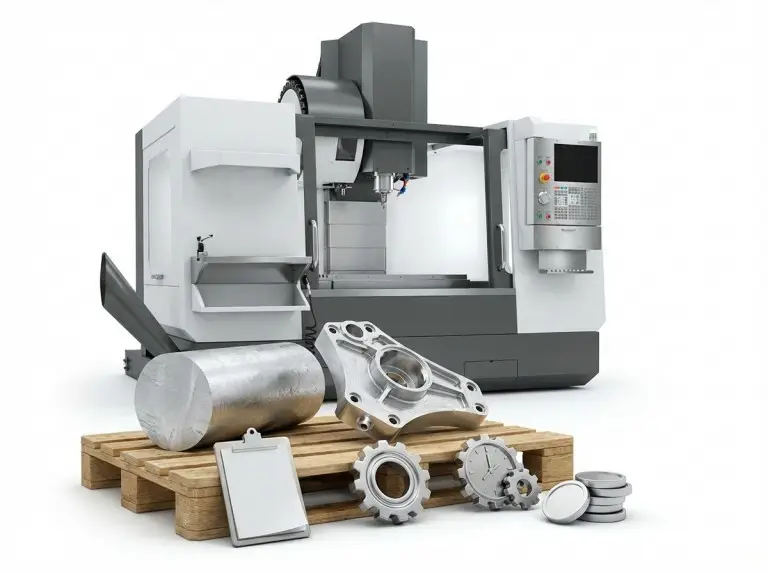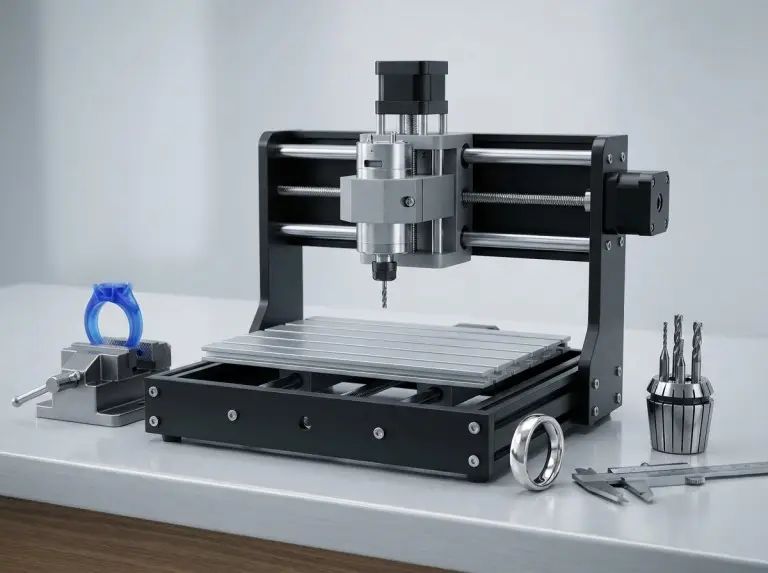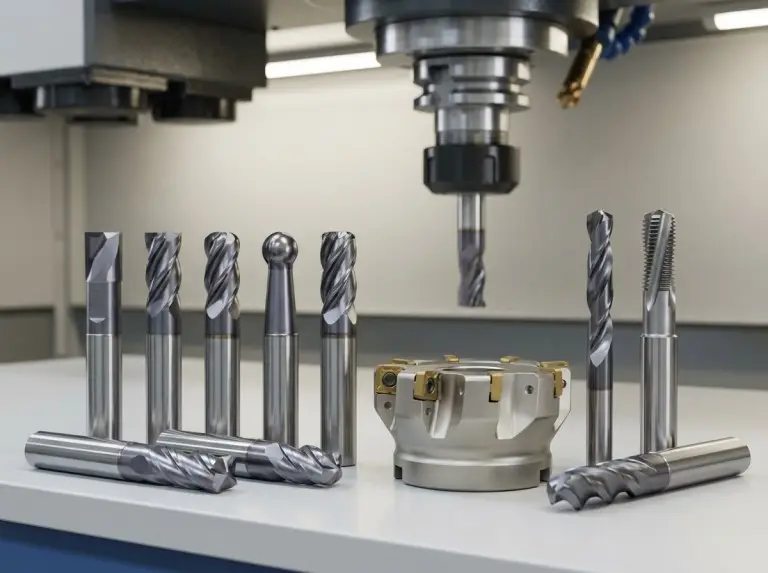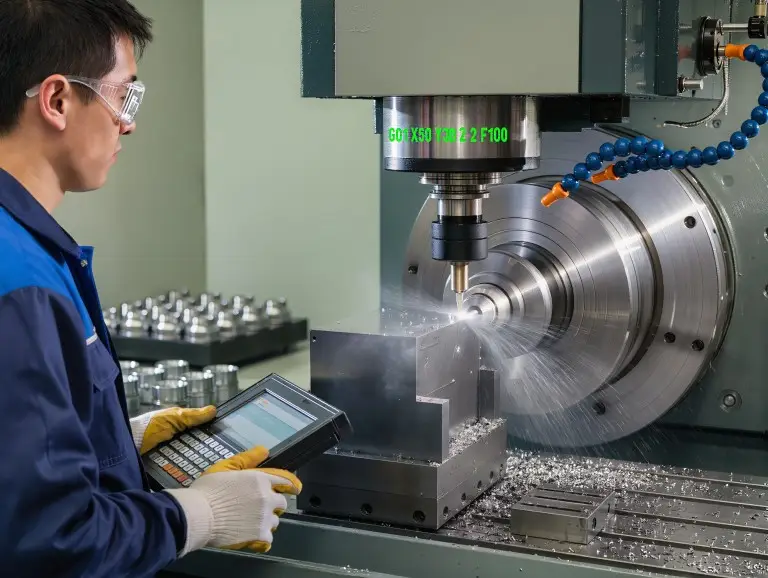

CNC machining, which can also be referred to as “computerized digital control”, has become a faster and more efficient way of manufacturing. It is a type of machining that is controlled by a program. A software-controlled milling, turning, or EDM machining removes layers of material from the workpiece to create the desired part. Manual machining, on the other hand, can only be done manually by a skilled machinist. Finally, when comparing CNC machining to manual machining, the benefits of CNC machining seem endless.
However, there are some companies that only use manual machining tools to create prototype parts. Hand machining is important, especially in the commercial sector and when making small quantities of rapid prototypes.
For a project to be successful, you need to choose the right machining production method. Below is a comprehensive comparison of CNC machining versus manual machining to help you decide which method is best for your business. It will help you make the best choice for custom prototypes and final production parts.
What Is CNC Machining?
CNC machining is a manufacturing method where a computer program controls machine tools. It performs tasks like cutting, drilling, and milling with high precision on various materials. This technique is widely used in industries because it improves productivity and ensures consistent, accurate parts. Compared to manual methods, CNC machining reduces human error and supports mass production. It achieves this by automating tool movements and workpiece processing through the machine’s controller.

Further reading: What Is CNC Machining?
What Is Manual Machining?
Manual machining is a traditional manufacturing process where an operator directly controls the machine tool. The operator shapes a workpiece through tasks like cutting, milling, and drilling, without using computer programs. While it is less accurate and efficient than CNC machining, it is ideal for one-off parts, prototyping, and small-volume production. Its flexibility and lack of programming requirements make it valuable in these scenarios. However, it relies on skilled craftsmen for precise work. Key types of manual machining include:
- Manual Lathe Machining: This involves manually operating a lathe to cut rotationally symmetrical parts, such as shafts, bearings, and threads. It is best suited for small batches or custom work.
- Manual Milling: This process uses manual control of a milling machine to create flats, bevels, grooves, and contours. It is ideal for quick adjustments in prototypes or single pieces.

CNC machining Advantages & Disadvantages
Advantages of CNC Machining
- Increased Production Speeds: CNC machines can operate continuously, optimized for cutting speeds, feed rates, and tool changes. This allows for significantly higher productivity, especially in high-volume production tasks, enabling the manufacture of a large number of parts in a short time.
- Versatility and Consistency: CNC machining is highly versatile and precise, making it a go-to solution for many industries. It produces accurate and consistent parts efficiently, and it can handle a variety of materials. Additionally, skilled engineers can operate multiple CNC machines simultaneously, further enhancing productivity.
- Reduced Staffing Needs and Maintenance: CNC machines require fewer operators, as one skilled machinist can oversee multiple machines. Despite running continuously, these machines demand less maintenance compared to manual machines, needing only periodic repairs and upkeep.
- Safety and Design Uniformity
CNC machines ensure operator safety by eliminating physical contact during operation. They also excel in design uniformity, capable of replicating the same design repeatedly, which boosts profitability without increasing workload or costs. - Versatility and Waste Reduction: CNC machines can perform various operations like milling, drilling, turning, and cutting, accommodating a wide range of materials and complex geometries. Their precision minimizes material waste, optimizing utilization and reducing costs.
- Mass Production with Low Labor Costs: CNC machining is ideal for mass production. Once programmed, it automates production for extended periods, significantly increasing throughput. Its high level of automation reduces the need for skilled labor, lowering overall labor costs.
Disadvantages of CNC Machining
- High Initial Cost: CNC machines and associated software are expensive to purchase and install. In addition, specialized software and technicians are required to write CNC programs, which further increases the initial investment.
- Maintenance Costs: CNC machines require specialized personnel for maintenance and upkeep, and parts are expensive to replace and repair. If the equipment fails, it can lead to production stoppages and potential financial losses.
- Programming Complexity: CNC machining requires the writing of detailed programs, which requires an operator or engineer with programming skills. This complexity makes it potentially difficult for small businesses or start-ups to immediately adapt to CNC machining.
- Less Flexibility: While CNC machining performs well in mass production, it is not as flexible as manual machining when changing product designs frequently or producing small batches. Each time a production job is changed, the machine needs to be reprogrammed and reset, which can lead to increased time and costs.
- Energy Consumption: CNC machines typically consume more energy than manual machines, especially during long runs. This high energy consumption can increase operating costs, especially in areas with high electricity costs.
- Operator Skill Requirements: Although CNC machining reduces the reliance on manual operations, it requires operators to have a certain level of technical knowledge, such as programming, troubleshooting, and machine operation. This places a high demand on technical training.
Further Reading: The Advantages and Limitations of CNC Machining

Manual Machining Advantages & Disadvantages
Advantages of Manual Machining
- Flexibility for one-offs and prototypes: Manual machining is suitable for one-offs and prototypes because there is no need to write complex programs and the operator can work directly on the workpiece. This flexibility allows designs to be quickly adapted to meet customized needs.
- Lower cost for small production runs: Manual machining is often less expensive than CNC machining for small production runs. By eliminating the need for complex programming and setup, manual machining can produce small quantities of parts in a shorter period, saving time and money.
- Simplified Maintenance: Manual machines are relatively simple and easier to maintain. Required repairs can often be done by the operator or a regular mechanic, resulting in lower maintenance costs.
- Skill Development: Manual machining relies on the experience and skill of the operator, and long-term operation develops and improves the machining ability of the craftsman. This is beneficial for skill-building and craftsmanship.
- Immediate Adjustments: During manual machining, the operator can make immediate adjustments to the situation, such as changing the depth of cut, feed rate, or tool position. This ability to make immediate adjustments makes manual machining more flexible when responding to unexpected situations.
- Cost Effectiveness: Because manual machining does not require an expensive investment in equipment, the initial cost is low. Manual machining is an affordable option for small businesses or individual studios with limited capital.
- Short Turnaround Time: Manual machining allows production to start quickly because there is no complicated programming and setup time. Especially when emergency production or quick delivery is required, manual machining can provide shorter turnaround times.
- No Programming Required: Manual machining does not require CNC programming, eliminating the time and complexity of programming. For simple machining tasks or small production runs, manual operation is more straightforward and efficient.
Disadvantages of Manual Machining
- Lower Accuracy and Consistency: Manual machining relies on operator skill, so machining accuracy and consistency are lower than with CNC machining. Human error can lead to inconsistent part sizes, especially in high-volume production.
- Lower productivity: Manual machining typically takes longer than CNC machining, especially when working with complex or high-volume parts. The speed and skill of the operator determine productivity and therefore may not be sufficient for mass production.
- Operator Fatigue and Risk of Errors: Manual operations require long periods of concentration, which can lead to operator fatigue. Fatigue increases the risk of errors that can affect part quality and safety.
- Complex Shapes Limitations: Manual machines are limited in their ability to machine complex shapes and geometries, especially in multi-axis machining or operations that require precise linkages that are difficult to achieve with manual machines.
- Challenges with repetitive tasks: Manual machining is difficult for tasks that require a high degree of repeatability and consistency. Even experienced operators struggle to maintain a high level of consistency from part to part over long periods.
- High Labor Requirements: Manual machining relies on operator skill and experience, and therefore requires a high level of craftsmanship. This increases training and labor costs and can impact production when operators are unavailable or there are labor shortages.
- Higher Safety Risks: Manual machining involves more direct operator contact with the machine tool, increasing the risk of injury. Without automated safety guards, operator safety relies on individual attention and experience.

Application Comparison
Applications for CNC Machining
Mass-produced parts: CNC machining is particularly well suited to the production of large quantities of parts, and CNC machines can maintain a consistently high level of accuracy and efficiency over long periods, ensuring consistent quality from part to part. This allows CNC machining to be used in a wide range of industries that require large quantities of standardized parts, such as automotive manufacturing, electronics, and aerospace.
Prototyping: CNC machining also plays an important role in prototyping. It can quickly turn design concepts into physical prototypes and iterate on them based on feedback, and its high precision and versatility make it possible to machine a wide range of complex geometries and materials.
Rapid machining applications: CNC machining is ideal when shorter production cycles are required. It allows complex parts to be machined in a shorter period while ensuring high accuracy and quality. This is especially important for manufacturers who need to respond quickly to market demands or respond to rush orders.
Highly complex parts: CNC machines can perform multi-axis operations, making them ideal for machining highly complex parts. These parts often have complex geometries and precision requirements that would be difficult to achieve by hand, and CNC machining is widely used in aerospace, medical devices, and high-tech products to meet the complexity and precision requirements of these industries.
Further reading: What Are the Applications of CNC Machining?
Applications for Manual Machining
Small Projects: Manual machining is suitable for small projects, especially for tasks that do not require high precision or complex design. Because of the flexibility of manual operation, operators can quickly adjust the process to meet the unique needs of small projects.
Smaller Quantity Parts: Manual machining is often a more economical option for producing smaller quantities of parts. Without the need for complex setup or programming, operators can start machining straight away, saving time and money.
Short Turnaround Times for Small Batches: Manual machining allows small batches to be started and completed quickly, especially when time is of the essence. The flexibility of manual machining allows the operator to make adjustments immediately without having to wait for programming or machine setup to be completed, which contributes to short production turnaround times.
CNC Machining vs. Manual Machining: Key Differences Explained
CNC machining and manual machining are two common types of machining in the manufacturing industry, each with its own unique advantages and limitations. To better understand the differences between them, we can compare them in terms of accuracy, repeatability, production volume, skills required, training, and initial cost. Below is a comparison table that Yonglihao Machinery has put together to help you quickly understand the differences between these two machining methods.
| Aspect | CNC Machining | Manual Machining |
| Accuracy | High precision, consistent results | Depends on operator skill, less consistent |
| Repetitiveness | Highly repetitive, ideal for mass production | Less repetitive, operator-dependent |
| Production Volume | Suitable for large volumes, efficient | Better for small batches or one-offs |
| Skill Required | Requires programming and machine operation skills | Requires hands-on machining skills |
| Training | Needs specialized CNC programming training | Requires practical experience and manual training |
| Initial Cost | High upfront investment for machines and software | Lower initial cost, cheaper equipment |

CNC vs. Manual Machining: Price Differences
You will see the price differences between CNC and manual machining in this section. The main price differences are listed below:
- Upfront Cost: CNC higher ($1,800–$100,000+ vs. Manual $1,000–$20,000+), due to software/tech; Manual wins for small shops.
- Hourly Rate: CNC $35–$150 (efficient for complex); Manual $40–$100 (effective higher due to 1.5–2x slower speed).
- Per-Part Cost:
Volume CNC Price/Part Manual Price/Part Winner Small Run (<50) $50–$200 $20–$100 Manual Medium (100–500) $20–$100 $30–$150 CNC High (>1,000) $5–$50 $50–$200+ CNC - Long-Term Total Cost: CNC lower (scrap <5% vs. 10–20%; labor 50% less; ROI in 1–3 years after 100–500 parts).
- Maintenance/Energy: CNC higher upfront ($500–$5,000/year) but predictive tech reduces downtime; uses 20–50% more power but offset by volume savings.
Further Reading: CNC Machining Cost
Summary
There is a big difference between CNC machining and manual machining. CNC machining is faster and more accurate than manual machining. You cannot expect the same results from manual machining as you can from CNC machining.
CNC machining is controlled by CAD and CAM software, which is more accurate, precise, and safe. CNC machining is faster, produces a better product, costs less, and is safer than manual machining.If you’re looking for precision and efficiency, consider using a CNC milling service online to streamline your production process and achieve high-quality results with ease.
Tired of manual machining for rapid prototyping? Switch to Yonglihao Machinery’s unique CNC machining services! Get instant quotes for CNC machining and custom-machined parts directly on our website. Enjoy free DFM feedback and a comprehensive full-dimensional report for your review. Contact us today and upload your files for instant pricing!
FAQ
What’s the Difference Between CNC and Manual Machining?
CNC machining is automated and controlled by computer programs, offering higher precision, faster production, and consistency. Manual machining relies on operator skill, making it better suited for small batches or custom one-off parts.
How Do I Choose Between CNC and Manual Machining for My Project?
For high-volume production, complex designs, or tight tolerances, CNC machining is ideal. Manual machining is more cost-effective for small batches, prototypes, or projects requiring flexibility.
Is CNC Safer Than Manual Machining?
Yes, CNC machining is safer because it automates the process, keeping operators away from direct contact with tools. Manual machining requires hands-on operation, which increases the risk of injury.
What Are the Cost Differences Between CNC and Manual Machining?
CNC machines have higher upfront costs but are more economical for medium to large production runs. Manual machining is less expensive for small batches but slower and less consistent.
Can CNC Machines Be Used for Prototyping?
Absolutely. CNC machining is excellent for prototyping, as it quickly turns designs into precise physical parts, allowing for rapid iterations and feedback.