

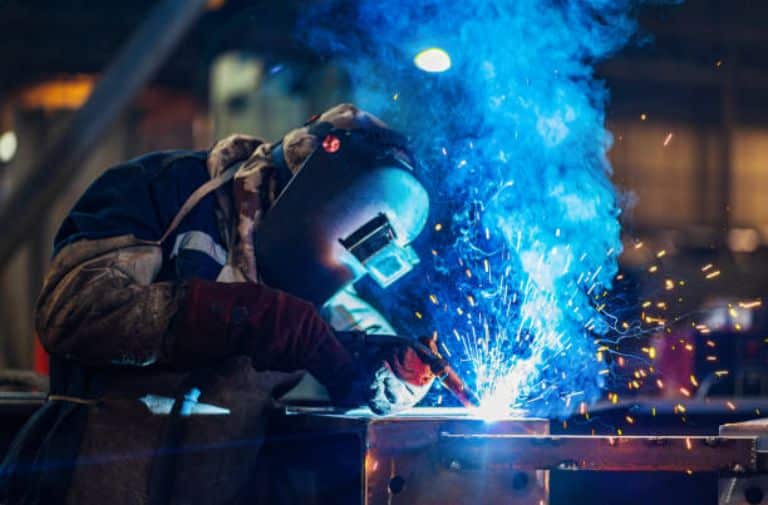
Small weld flaw can affect fatigue life and leak tightness. “Minor” defects can lead to costly rework or field failures. In production, defects often appear as visual signs. These can be toe grooves, pinholes, or a poor profile. But the real risk is what you cannot see. This includes a lack of fusion at the sidewall or trapped inclusions. It also includes root penetration that never fully formed. At Yonglihao Machinery, we see a common pattern. Defects are rarely random. Most can be traced to things you can control. These include joint prep, heat input, shielding, and fit-up. This guide is practical. It helps you find the defect fast. You can link it to the most likely root causes. Then, you can choose the right inspection and actions to prevent repeat defects.
What Are Welding Defects?
A welding defect is an flaw that goes beyond set limits. These limits are for a given standard or use. The flaw can reduce the part’s fitness for service. A discontinuity is different. It is any break in the “ideal” weld condition. It may still be acceptable if it stays within allowed limits.
ISO terms are often used like this:
|
Term |
What it means |
Common standard reference |
|---|---|---|
|
Weld defect |
Flaw that compromises acceptance/fitness |
ISO 6520 (classification language is commonly used) |
|
Weld discontinuity |
Flaw that may be acceptable within limits |
ISO 5817 / ISO 10042 (acceptance levels depend on class) |
In practice, the choice between “defect” and “discontinuity” is tied to other factors. These include the acceptance class, service condition, and defect location. It is not just the defect’s name. A small surface pore on a cosmetic bracket might be fine. The same pore near a highly stressed toe can be a reject. Good QA starts with two questions. First, where is the indication? Is it at the root, toe, heat-affected zone, or inside? Second, what will the part face in service? This could be a static load, cyclic load, pressure, or vibration. Once those are clear, standards and plans can be applied consistently.

Why Welding Defects Happen?
Most welding defects come from a mismatch. This mismatch is between heat input, shielding, cleanliness, and joint fit-up. When one of these is unstable, you get a repeatable signature. For example, a high arc length tends to cause undercut and spatter. Poor shielding leads to porosity. A poor fit-up results in incomplete penetration or overlap. Poor cleaning between passes shows as slag inclusions.
Process root causes usually fall into five groups:
- Equipment & power stability: Drifting current or voltage, worn contact tips, a poor return path, or inconsistent wire feed.
- Parameters & heat input: Travel speed, arc length, wire feed, and pulse settings. These can drive undercut, lack of fusion, or burn-through.
- Material & surface condition: Rust, mill scale, oil, coatings, moisture, and oxide layers. These drive porosity and inclusions.
- Joint design & fit-up: Root gap, bevel, land, and misalignment. Poor clamping can also cause incomplete penetration, cracking, or distortion.
- Technique & access: Torch angle, stickout, weaving, interpass cleaning, and sequence control. This is key in multi-pass work.
On the shop floor, we treat fixtures and fit-up as a “silent parameter.” If parts do not mate well, operators adjust. They change their angle, speed, and dwell time. This causes variation to grow. Before you adjust current or voltage, lock down other things. Secure the clamping, gap, alignment, and access. Then, record the actual travel speed and stickout used. This is often where the root cause is found.
Main Types of Welding Defects
Weld Cracks
A weld crack is a sharp fracture. It can be in the weld metal, heat-affected zone, or base metal. It creates a high stress point and can spread quickly. Hot cracking is tied to how the metal solidifies and cools under restraint. Cold cracking is often linked to hydrogen, hard microstructures, and stress.
Use crack control discipline. This is needed when the joint is restrained, thick, or high-strength. It is also for service-critical parts. Small cracks rarely “stay small.” Cracks must be removed down to sound metal. You must verify preheat and interpass controls where needed. Use clean consumables and a controlled cool-down to prevent re-cracking. If cracks repeat in the same area, treat it as a system issue. This points to joint restraint, hydrogen control, or heat input, not just a cosmetic flaw.
Undercut
Undercut is a groove at the weld toe. It reduces the effective cross-section of the weld. It also raises fatigue sensitivity. It often happens when travel speed is high or arc length is too long. A poor torch angle can also wash metal away from the edge.
Preventing undercut is usually a “stability fix.” It is not a redesign. Tighten the arc length and reduce high voltage. Slow down slightly and keep a stable torch angle. This helps the toe get enough filler metal. If undercut appears mainly on one side, check access and fit-up. Operators often lean away from the toe when clearance is tight.
Overlap
Overlap is when weld metal rolls over the base metal. It does so without proper fusion at the toe. This is often caused by slow travel or low fusion energy at the toe. It can also happen when the puddle floods beyond the toe.
Overlap is more likely on fillets and out-of-position welds. Here, puddle control is harder. Improve wetting by increasing heat at the toe, within limits. Keep a tighter, shorter arc. Use a more controlled bead size. Maintain an angle that directs energy into the toe, not outward.
Porosity
Porosity is gas trapped in the solidifying weld metal. It can appear on the surface or inside. Scattered pinholes often point to shielding issues or drafts. Pores that cluster at starts and stops suggest arc stability problems or moisture. “Worm tracks” may mean surface contamination or a collapsing shielding envelope.
Porosity control is a cleanliness and shielding problem first. It is a parameter problem second. Start with these steps. Clean the metal until it is bright where needed. Keep consumables and joints dry. Verify the gas type and ensure a leak-free flow. Protect the area from airflow. Keep a consistent stickout so the gas cup shields the puddle. Once those are stable, you can fine-tune travel speed and heat input. This helps gas escape before the metal solidifies.
Slag Inclusion
Slag inclusion is nonmetallic material trapped in the weld. It is common in flux-based processes or between multi-pass layers. The usual cause is poor cleaning between passes. It can also be from poor bead placement or low heat that cannot float the slag out.
If slag shows up between passes, treat cleaning as a required step. Do not clean only “as time allows.” Improve joint access. Ensure enough heat input for the slag to float out. Place beads to avoid creating pockets that trap slag. When inclusions repeat at the sidewall, check the joint geometry and angle. Slag often hides in sharp corners.
Incomplete Fusion
Incomplete fusion means the weld metal did not fuse to the base metal. This can happen at the sidewall or between passes. It often hides behind a “good-looking bead.” The surface can be filled while the sidewall never truly melted.
Typical triggers are low heat at the fusion line. This can be from traveling too fast, a wrong torch angle, or too much stickout. Contamination or bead placement that lets the puddle outrun the arc are also causes. Adding filler will not fix a fusion issue unless the interface is melted. Aim energy into the sidewall or root. Correct the joint geometry and access. Verify with the right inspection when the joint is critical.
Incomplete Penetration
Incomplete penetration occurs when the weld does not go fully through the joint at the root. It is often driven by a tight root geometry or misalignment. An insufficient root gap or low root heat can also be the cause.
If penetration is consistently short, the fix is usually in the joint geometry and torch position. It is not about adding “more cover passes.” Verify the root opening, bevel, and alignment. Make sure the electrode is directed into the root. This ensures the root face melts and ties in.
Burn-Through
Burn-through is a hole created when the weld fully melts through the base metal. It happens on thin sections or with large gaps. It is most common with too much heat input, slow travel, or poor fit-up.
Burn-through control starts with fit-up and restraint. Close gaps, clamp properly, and use backing when needed. Then, tune your parameters. Reduce the heat input and shorten the dwell time. Maintain a steady travel speed to avoid overheating one spot. For thin sheets, consistent gap control often matters more than small parameter changes.
|
Defect |
Typical “tell” |
Most common drivers |
First corrective action |
|---|---|---|---|
|
Cracks |
sharp lines, often in HAZ/toe/root |
restraint, hydrogen, fast cooling, chemistry |
remove to sound metal + control preheat/cool |
|
Undercut |
groove at toe |
high voltage/arc length, fast travel |
tighten arc, adjust angle, add toe support |
|
Overlap |
rolled toe, poor wetting |
slow travel, low toe fusion |
increase wet-in, reduce flooding, refine angle |
|
Porosity |
pinholes/voids |
contamination, shielding loss, drafts |
clean/dry + verify gas coverage/leaks |
|
Slag inclusion |
trapped nonmetal indications |
poor interpass clean, low heat/angle |
clean + improve bead placement/heat |
|
Incomplete fusion |
lack of bond line |
low heat, speed, contamination |
increase effective fusion energy + prep |
|
Incomplete penetration |
unfused root |
tight root, low root heat, misalignment |
correct root geometry + torch position |
|
Burn-through |
hole/melt-through |
excess heat, slow travel, gap |
improve fit-up + reduce heat input |
How to Detect Welding Defects?
You detect welding defects by matching the inspection method to the defect’s location. This could be on the surface, near-surface, or internal. A good inspection plan starts with a question. What failure mode are we preventing? Leaks and pressure boundaries need high sensitivity to pores and inclusions. Fatigue-loaded joints need you to check for toe cracks, undercut, and lack of fusion. Thick, multi-pass welds require checking for internal flaws. Start with Visual Testing (VT) to catch common external issues. Then, use Non-Destructive Testing (NDT) when risk requires more certainty.
VT (Visual Testing): This method finds cracks, undercut, overlap, spatter, and burn-through. Use proper lighting and magnification as needed. Measure findings against the criteria. The size and location matter more than just their presence.
|
Method |
Best for |
Typical limits to remember |
|---|---|---|
|
PT (Liquid Penetrant) |
surface-breaking cracks/porosity on clean, non-porous surfaces |
won’t see internal defects; needs clean/dry surface |
|
MT/MPI (Magnetic Particle) |
surface + near-surface flaws in ferromagnetic materials |
only for magnetic materials; surface prep matters |
|
UT (Ultrasonic) |
internal planar defects, lack of fusion/penetration |
geometry and skill sensitive; small pores can be harder to find |
|
RT (Radiography) |
internal volumetric defects (porosity, slag), some geometry issues |
access and safety constraints; planar cracks can be hard to see |
A practical rule is this: if the result of a failure is high, do not rely on VT alone. Use the method that can “see” the expected defect in your joint geometry.

Repair Basics: When to Grind, Reweld, or Reject
A good defect repair is a closed loop. First, remove the indication completely. Second, re-weld under controlled conditions. Third, re-inspect to confirm it is acceptable. Most repair failures happen for two reasons. One, the defect was only blended and not fully removed. Two, the original root cause was not fixed before rewelding. Skipping any step is how repairs become repeat defects.
Typical repair logic:
- Remove to sound metal: Grind or gouge out cracks, slag, or lack-of-fusion areas. Avoid just blending the surface.
- Reweld with control: Restore stable shielding, joint condition, and parameters. Avoid stacking heat without a plan.
- Re-inspect: Use VT as a minimum. Use other NDT methods when required by the criteria or risk level.
When should you reject a part instead of repairing it? Do this if removal violates the minimum thickness. Or if it distorts critical geometry. Also, reject if repeated repairs show an unstable process. One clean repair is fine. Repeated patching signals a process problem.

Prevention Checklist
Prevention works best when you standardize the inputs that cause defects. These include cleanliness, fit-up, parameters, and sequence. We focus on reducing variation first. Variation creates “random defects” that are hard to control. If two operators use different stickout, travel speed, and torch angles, the same settings will not produce the same weld.
Weld-prep checklist (fast but high impact):
- Surface: Remove oil, paint, rust, or oxide where the arc must work. Keep consumables dry.
- Fit-up: Verify the root gap, bevel, and alignment. Clamp to control movement.
- Shielding: Confirm gas type, steady flow, and leak-free connections. Protect from drafts.
- Parameters: Lock in a stable window for current, voltage, wire feed speed, and travel speed. Avoid “chasing” by feel.
- Technique: Use a consistent torch angle, stickout, and arc length. Clean between passes for multi-pass work.
- Heat & sequence: Control interpass temperature when needed. Use a sequence that reduces distortion and cracking.
If one defect type is common, like porosity, fix its main driver first. This would be cleanliness or shielding. Do this before you tune settings. Parameter changes cannot fix a contaminated base metal or a shielding leak.
Conclusion
If you want fewer welding defects, do not start with “more inspection.” Whether you handle general fabrication or offer specialized welding services, start with stable fit-up, clean surfaces, and controlled inputs. At Yonglihao Machinery, the fastest wins come from a simple sequence. First, lock down joint prep and clamping. Second, verify shielding integrity. Third, document a stable parameter window. Fourth, enforce basics like interpass cleaning. Finally, use VT and the right NDT to confirm, not guess. When you treat defects as signals of unstable inputs, weld quality becomes predictable.
FAQ
What are the most common welding defects in production?
Cracks, porosity, undercut, overlap, slag inclusion, and lack of fusion are the most common. They repeat because they are tied to controllable inputs. These inputs are fit-up, cleanliness, shielding, and heat input. Stabilize those inputs before changing procedures.
How can I quickly tell “defect” vs “discontinuity” on the shop floor?
You cannot decide without acceptance criteria. A “defect” is a discontinuity that exceeds the limits for the part’s use. Identify the indication type and size. Then, compare it to the acceptance class. Location and service load can change the final decision.
What usually causes porosity even when gas is on?
Most porosity comes from contamination or a loss of shielding coverage. It is not just from “too little gas.” Check for oil, moisture, or paint. Look for drafts, leaks, and incorrect stickout. Unstable arc conditions can also disturb the shielding.
What’s the fastest way to reduce undercut?
Shorten your arc length. Reduce excessive voltage. Keep a stable torch angle so the toe is supported by filler metal. If it repeats in one position, improve clearance or fixturing. Access problems often force angles that cause undercut.
When should I choose UT vs RT for internal defects?
Choose UT when you suspect planar defects like lack of fusion. Choose RT when volumetric defects like porosity or slag are the main concern. Joint geometry, access, and defect orientation also matter. The “best” method is the one that reliably finds your expected flaw.


