
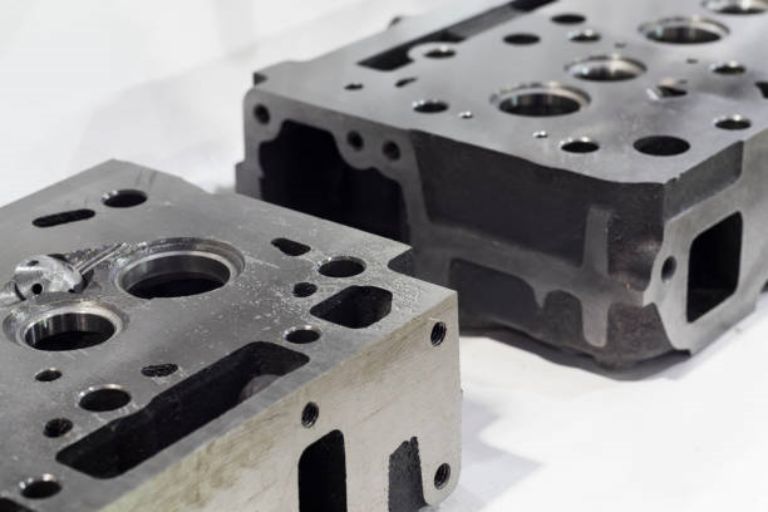
Investment Casting Services

Yonglihao Machinery offers custom investment casting services. We create complex, high-precision metal parts. Our focus is on repeatable dimensions, clean surfaces, and stable delivery for your production needs. If your design has tight fits, thin walls, or internal features, we can review its manufacturability early. This helps reduce rework.

Custom Investment Casting Services

DFM First

We review your drawing early and flag high-risk features. You avoid tooling rework and repeated sampling. This shortens the path from RFQ to stable production.

Proof-Backed QC

We control key steps from wax pattern to final inspection. You get clear measurement results on critical features. That reduces fit issues and surprise defects after delivery.

One-Stop Delivery

Casting, machining, heat treatment, and finishing follow one plan. You deal with fewer handoffs and less schedule drift. Parts arrive ready for assembly, with repeatable results.

What Is Investment Casting?

Investment casting, also known as lost wax casting, forms metal parts by pouring molten metal into a ceramic shell. This shell is built around a wax pattern. The process is widely used for intricate geometry, fine details, and near-net shapes with clean surfaces.

This method is often chosen for parts with complex contours, internal features, or tight fit needs. The part is cast very close to its final shape. Because of this, you often only need to machine the features that truly require it. This can shorten cycle times and keep material use efficient.

Investment Casting Capabilities

This will help you quickly determine if our services meet your needs before you submit a RFQ. We confirm final capability after reviewing your drawing, as feature size and geometry determine the outcome.

Item

Typical Range / Notes

Typical tolerances

±0.1 mm (feature-dependent; confirmed after drawing review)

Surface finish

125 RMS or better (per geometry and alloy)

Material efficiency

High material use for complex shapes and near-net parts

Materials

Stainless steel, carbon steel, aluminum, brass & bronze (reviewed grade-by-grade)

Secondary operations

Machining, polishing, passivation, plating, powder coating, heat treatment (as needed)

Quality deliverables

Dimensional inspection records; material/inspection reports upon request

For critical interfaces, we suggest identifying CTQ (Critical to Quality) features on your drawing. This helps us lock in datums and inspection plans early.

Materials & Alloy Options

We select a metal based on your strength, corrosion resistance, wear, and cost targets. The final grade choice is confirmed during the drawing review. If you are switching from a machined part to a cast part, we can help confirm if the original alloy is still the best choice.

Stainless Steels: Stainless steels offer high corrosion resistance and cleanliness. They are a good fit for valves, fluid handling parts, medical/food equipment, and harsh environments. Passivation is commonly used when the stainless steel’s corrosion performance is critical.

Carbon Steel & Low-Alloy Steels: Carbon and low-alloy steels balance cost with strength and toughness. They are common for brackets, structural parts, shafts, and general industrial hardware. We can apply heat treatment when you specify hardness or strength targets.

Aluminum (When Lightweight Matters): Aluminum reduces weight and is easy to machine. It is often used for housings and lightweight parts. The finishing is selected by the application. Anodizing is typically chosen for corrosion protection and appearance.

Brass & Bronze: Brass and bronze offer good wear resistance and sliding performance. They are widely used for bearings, bushings, gears, and pump components. They are a practical choice when galling or sliding wear is a concern.

High-quality surface finish investment casting parts, versatility and precision of Yonglihao Machinery's casting service

Main Post-Processing Options

Post-processing finishes the surface, improves corrosion resistance, or adjusts mechanical properties. The selection depends on the material and the part’s function. We recommend choosing treatments by function first, then appearance.

As machined
As machined(Ra 3.2μm / Ra 126μin)

Workpieces are left with natural tool marks and roughness. Ideal for applications that do not require a special look or additional machining.

Smooth Machining CNC Machine Part
Smooth Machining (Ra 1.6μm / Ra 63μin)

Higher accuracy and smoother surfaces for precision machinery, optical instruments and medical device parts.

Polishing metal components
Polished (Ra 0.8μm / Ra 32μin)

Smooth and shiny polished surfaces for decorative parts, medical devices and high precision equipment.

Bead Blasting cnc Parts
Bead Blasting

Cleaning and polishing of the surface to achieve a matt and smooth effect.

Sandblast + Type III Anodised (Hard Coat) parts
Sandblast + Type III Anodised (Hard Coat)

After sandblasting and polishing, the parts are anodised to obtain a thick coating with high abrasion resistance, increasing hardness and durability, especially for aluminium parts that require extra strength.

Bead Blasting + Anodising Type II CNC parts
Bead Blasting + Anodising Type II

The surface is bead blasted to a matt finish and then anodised for better corrosion and abrasion resistance. Available in various colours, commonly used for aluminium parts.

Black Oxide Parts
Black Oxide

A black coating applied to steel and stainless steel to prevent corrosion and improve appearance. Commonly used for automotive, mechanical and decorative parts.

Powder Coat

A robust, wear-resistant coating applied by electrostatic spraying. Available in glossy and matt colours, it is similar to paint and is used on furniture, metal products and automotive parts.

Chromate Conversion Coating Parts
Chromate Conversion Coating

Adds a protective layer to aluminium or zinc alloys to improve corrosion resistance and electrical conductivity. Used in aerospace, electronics and automotive parts.

Electroplating parts
Electroplating

Plating a thin layer of metal to improve corrosion resistance, abrasion resistance or electrical conductivity, and to improve appearance.

Brushed metal parts
Brushed

Adds texture to the surface of a metal part to give it a metallic feel. Commonly used in household appliances and decoration.

Tumbling

A process that smooths parts by using abrasives to remove burrs and sharp edges, improving surface finish

When to Use Investment Casting

Investment casting is a strong choice when you need complex geometry with controlled dimensions and a good as-cast finish. It is especially useful when machining would be slow, costly, or risk distorting thin sections.

Good fit when

  • You need fine details, thin sections, or shapes that are hard to machine.
  • You want near-net parts to cut down on machining time and waste.
  • You need consistent results for production runs.

Consider other methods when

  • Your part has a very simple geometry and cost must be minimal.
  • The parts are too large for practical handling.
  • The design allows for cheaper fabrication or machining.

A quick rule of thumb: choose investment casting when the main challenge is geometry, not just volume.

Quality Control & Inspection

We ensure quality through documented checkpoints, from the wax pattern to the final casting. This approach reduces variation and supports stable repeat builds. Our goal is simple: the part should match your drawing, not just “typical casting expectations.

Process Control: Key process inputs are controlled to keep results consistent. For critical specs, we align our controls with your drawing notes and acceptance criteria. This is how we reduce problems like one good batch followed by a drifting one.

First-Piece Verification: First-piece checks confirm the geometry before we start full production runs. This protects your schedule and lowers the rework risk on repeat orders. If you have CTQ features, we recommend validating them first before scaling up.

Dimensional Inspection: Critical-to-fit features are verified to match your drawing requirements. The inspection scope follows your tolerances and functional interfaces. Where needed, we can provide inspection records that align with your drawing callouts.

Testing & Reports: When your project requires it, we can provide supporting material and inspection documents. If you specify chemical or NDT requirements, we align the plan and reporting to your standard. If you already use a specific acceptance standard, please share it early so we can match the workflow.

Durable investment casting parts with excellent surface finish achieved by Yonglihao Machinery

How the Investment Casting Process Works?

Our workflow turns a wax pattern into a ceramic shell, then into a finished metal part. Each step has defined checkpoints to protect dimensional accuracy. We also use the process plan to control risks like shrinkage, warpage, and surface defects.

  1. Pattern & Tooling: Wax pattern is an exact copy of your final part. We control the accuracy of the wax pattern because it drives the final dimensions. If your design has very thin ribs or tight internal corners, early feedback at this stage helps most.
  2. Ceramic Shell Building: The wax pattern is repeatedly coated in ceramic slurry and stucco. This builds a heat-resistant shell. Shell integrity is critical for a good surface finish and a sound casting. A stable shell build-up supports consistent surfaces and reduces variation.
  3. Dewaxing: We remove the wax from the hardened shell to create a precise cavity. This step preserves fine details and prepares the shell for high temperatures. Proper dewaxing lowers the risk of shell cracking or trapped residue.
  4. Pouring Metal: Molten metal is poured into the preheated shell to fill the cavity. Proper filling supports consistent geometry and reduces the risk of defects. The pouring setup is matched to the alloy’s behavior and feature thickness, so thin sections fill predictably.
  5. Knockout & Cut-Off: After the metal hardens, we break away the shell and remove the gating. Cut-off and cleaning prepare the part for finishing and inspection. This is also where we check the casting’s condition before any secondary work begins.
  6. Finishing & Secondary Machining: Finishing brings the part to its final surface and functional dimensions. Typical work includes polishing, machining datums, and preparing surfaces. If a feature controls the fit (like bores, sealing faces, or threads), we usually treat it as a controlled machining and inspection step.
High precision investment casting parts with intricate designs and complex geometries - Yonglihao Machiner

Typical Parts & Applications

Investment casting supports applications where complex geometry and performance stability matter. If you can share a reference part photo or assembly context, we can align the process plan faster.

FAQ

Stainless steel, carbon steel, aluminum, and copper alloys are common. The best choice depends on corrosion, strength, and wear needs, not just the price.

Typical tolerances are within ±0.1 mm for qualified features. Geometry, feature size, and datum selection are the main factors that drive what is achievable.

A smooth as-cast finish is typical, with 125 RMS or better on suitable geometry. Polishing or machining can be added when a contact surface requires it.

We use process checkpoints, first-piece verification, and dimensional inspection. For critical projects, we align the inspection scope to your CTQ features and required reports.

Lead time depends on tooling, complexity, and quantity. If your schedule is critical, tell us your target date early. This allows us to confirm feasibility and find the best route.

Scroll to Top