

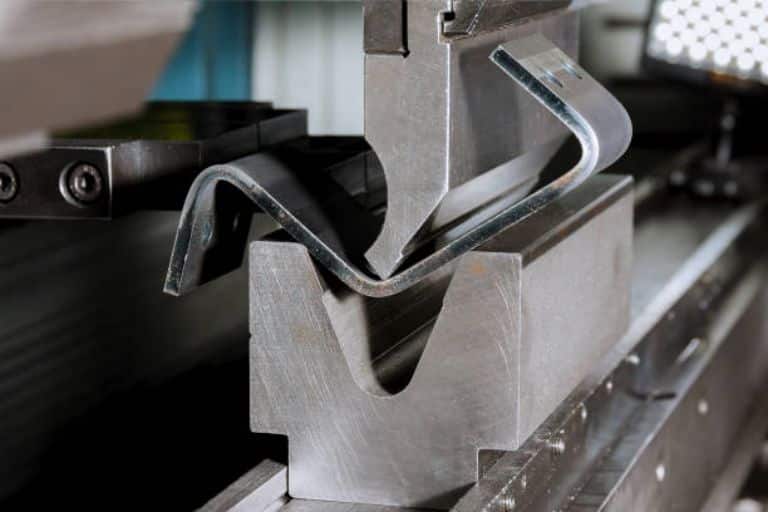
Metal bending is an essential process in manufacturing and production. It allows manufacturers to mold metal into a desired shape. There are various methods of metal bending, but there are three main common ones: air bending, bottom bending, and roll bending. Each method has its own unique characteristics and applications. In this post, we’ll take an in-depth look at these three types of metal bending processes.
What is metal bending?
Metal bending is a manufacturing method that deforms metal. It changes the shape of the metal, but not its volume. The degree of deformation determines the bending angle, which is an important characteristic. This technique requires a thorough understanding of the workpiece, material thickness, and bending allowance. Bending allowance is the amount of material that can be bent without breaking.
Sheet metal bending consciously reshapes the metal while maintaining its integrity. The success of this process depends on the adjustment of numerous parameters such as bending angle and bending allowance. It is important to note that both of these parameters are affected by the thickness of the material.
Proper understanding and implementation of these aspects of the parameters is essential to produce a workpiece that meets the necessary specifications and standards.

Three Common Metal Bending Processes
Air bending, bottom bending, and roll bending are the three most common types of metal bending. Different types of metal bending processes require different tools and operating techniques. Understanding how these bending processes work can help you determine which method is best for your application.
Air Bending
Air bending is one of the most commonly used bending techniques in metal fabrication. In this process, a punch presses a sheet of metal against a mold. However, the punch does not make contact with the bottom of the mold. Instead, it creates a gap, creating an air space. This space allows the metal to be bent to the proper angle without fully entering the mold.

Advantages of Air Bending:Air bending offers several advantages. First, it’s very adaptable. You can simply adjust the angle to make it fit a variety of uses. Second, it requires less force than other procedures. Finally, air bending reduces the possibility of over-bending. This controlled technique provides precise angles.
Air Bending Applications:This bending process is typically used for lighter gauge materials. Air bending is commonly used in the HVAC, sheet metal, and automotive industries. Its versatility makes it suitable for producing complex shapes and components.
Bottom Bending
Bottom bending is also known as “mold bending”. It uses a punch and a die to fully support the metal during the bending operation. The punch forces the metal into the mold, ensuring perfect contact. This process creates more defined angles and shapes.

Advantages of Bottom bending:Bottom bending offers excellent precision and uniformity. As the metal is properly supported. This therefore reduces the likelihood of the metal springing back when it tries to return to its original shape.In addition, this process is suitable for thicker metal materials. The robustness of bottom bending allows for precise bending without compromising the integrity of the metal.
Bottom Bending Applications:This technology is widely used in industries such as aerospace and defense where precision is critical. It is ideal for manufacturing structural components, brackets, and housings. As it enables precise metal bending angles. Hence this bending process is popular among engineers and fabricators.
Roll Bending
Roll bending is a unique process for manufacturing curved and cylindrical shapes. In this process, metal is passed through three rollers, which apply pressure and then shape the metal to a specified radius. The rollers can be adjusted to provide different levels of curvature.

Advantages of Roll Bending:Roll bending offers several advantages. It excels at producing large quantities of curved parts, making it ideal for mass production. In addition, this method can bend thicker materials and minimize distortion. Rollers can handle a wide range of metals, making roll bending highly adaptable.
Roll Bending Applications:This bending process is commonly used in industries such as construction and automotive. It is suitable for manufacturing pipes, tubes, and bent metal parts. In addition, roll bending is capable of producing regular shapes. Therefore, the process is very useful in high-volume manufacturing projects.
Conclusion
These three different types of metal bending processes have different advantages and applications. Air bending provides flexibility and efficiency for lighter materials. Bottom bending provides greater precision for heavier materials. Roll bending, on the other hand, is ideal for curved and cylindrical forming.
Understanding these strategies can help you choose the best technique for your project. By using the right bending method, you can obtain the desired shape. This ensures high-quality results in metalworking.
Yonglihao Machinery is committed to providing quality sheet metal bending services to our customers. If you still have questions or need help, please contact us. We have a professional service team that can solve your problems.


