
Metal Bending Services

Yonglihao Machinery’s Metal Bending Services deliver custom sheet metal parts with controlled geometry and repeatable bend angles for prototypes and production. We focus on fit-critical features—so if your design includes holes near bend lines, tight flange clearances, or cosmetic faces, our engineers flag risks early and recommend a manufacturable approach before release.

Custom Metal Bending Services-Yonglihao Machinery

Engineering-led support

DFM review on radius, relief, clearance, and springback before release

Stable production control

ISO 2768-based checks with consistent setups and defined inspection points

Responsive delivery workflow

Clear RFQ inputs, fast alignment, and reliable lead times for repeat builds

What is Metal Bending?

Metal bending is a fabrication process. It uses controlled mechanical force to form metal into a specific shape or angle. This method is widely used to create durable parts. These parts have consistent angles, clean lines, and a reliable fit.

At Yonglihao Machinery, we handle both simple and complex bending jobs. We use electric and hydraulic press brakes. Our custom services include DFM review, stable setups, and controlled tooling selection. We also use inspection checkpoints to keep results predictable.

Good bending is not just about the press brake. It involves how the bend line is referenced. It also depends on how springback is managed. Finally, it requires controlling stack-up across multiple bends.

Metal Bending

Metal Bending Capabilities & Tolerances

Our metal bending standards depend on ISO 2768, and final acceptance follows your drawing and RFQ. We combine capacity planning with clear tolerance targets, so you can confirm feasibility early and keep inspection criteria consistent from prototype to production.

ItemStandard / Capability
Maximum Part Size1.5 m × 1.5 m
Metal Bending ForcesUp to 1000 tons
Bending Line LengthUp to 7200 mm
Bending ThicknessUp to 60 mm
Bend Cutting AreaUp to 4000 mm
Bend to edge/hole, single surface±0.254 mm (±0.010 in.)
Bend RadiusEqual to material thickness
Bend Angle±1°
Lead Time5 days or more

Surface Finishes & Post-Processing Options

We offer surface finishes to improve durability, corrosion resistance, and appearance. The right finish depends on the environment, cosmetic needs, and critical features.

As machined
As machined(Ra 3.2μm / Ra 126μin)

Workpieces are left with natural tool marks and roughness. Ideal for applications that do not require a special look or additional machining.

Smooth Machining CNC Machine Part
Smooth Machining (Ra 1.6μm / Ra 63μin)

Higher accuracy and smoother surfaces for precision machinery, optical instruments and medical device parts.

Polishing metal components
Polished (Ra 0.8μm / Ra 32μin)

Smooth and shiny polished surfaces for decorative parts, medical devices and high precision equipment.

Bead Blasting cnc Parts
Bead Blasting

Cleaning and polishing of the surface to achieve a matt and smooth effect.

Sandblast + Type III Anodised (Hard Coat) parts
Sandblast + Type III Anodised (Hard Coat)

After sandblasting and polishing, the parts are anodised to obtain a thick coating with high abrasion resistance, increasing hardness and durability, especially for aluminium parts that require extra strength.

Bead Blasting + Anodising Type II CNC parts
Bead Blasting + Anodising Type II

The surface is bead blasted to a matt finish and then anodised for better corrosion and abrasion resistance. Available in various colours, commonly used for aluminium parts.

Black Oxide Parts
Black Oxide

A black coating applied to steel and stainless steel to prevent corrosion and improve appearance. Commonly used for automotive, mechanical and decorative parts.

Powder Coat

A robust, wear-resistant coating applied by electrostatic spraying. Available in glossy and matt colours, it is similar to paint and is used on furniture, metal products and automotive parts.

Chromate Conversion Coating Parts
Chromate Conversion Coating

Adds a protective layer to aluminium or zinc alloys to improve corrosion resistance and electrical conductivity. Used in aerospace, electronics and automotive parts.

Electroplating parts
Electroplating

Plating a thin layer of metal to improve corrosion resistance, abrasion resistance or electrical conductivity, and to improve appearance.

Brushed metal parts
Brushed

Adds texture to the surface of a metal part to give it a metallic feel. Commonly used in household appliances and decoration.

Tumbling

A process that smooths parts by using abrasives to remove burrs and sharp edges, improving surface finish

Materials for Custom Metal Bending

We support custom metal bending for common sheet and plate materials. These are used in production environments. Material grade and temper change the bend radius and springback. They also affect crack risk and surface marking. We confirm the best option during DFM. This matches your geometry and tolerance targets.

Stainless steel resists corrosion and cleans easily. It is common in medical, food, and marine settings. It springs back more than mild steel. Therefore, angle control and tooling choice are key on long bends.

Alloys / Grades

  • SUS 304 / 304L
  • SUS 316 / 316L
  • SUS 301 (higher strength; tight radii need review)

Aluminum is light and resists corrosion. It is a strong choice for enclosures, brackets, and panels. It also suits structural sheet parts. Bendability changes a lot with alloy and temper. We confirm the radius and forming direction during DFM.

Alloys / Grades

  • 5052-H32 (excellent for bending)
  • 5083-H111 / H321 (good corrosion resistance; formability depends on thickness/state)
  • 6061-T4 / T6 (T4 bends easier; T6 often needs larger radius—DFM review recommended)

Steel is cost-effective and stiff. It is ideal for brackets, frames, and guards. It works well for general industrial parts. Outdoor or humid use requires corrosion protection. Galvanized options can provide fast protection.

Alloys / Grades

  • SPCC / CRS (cold rolled steel for formed sheet parts)
  • A36 / S235 / Q235 (general structural grades)
  • A572 Gr50 / S355 / Q345 (higher strength structural grades)
  • Galvanized (SGCC / G90-equivalent) (when corrosion resistance is needed)

Copper conducts electricity and heat well. It is used in electrical parts and shields. It also suits thermal assemblies. Cosmetic faces mark easily. We should define handling and protection plans early.

Alloys / Grades

  • C110 (ETP Copper)
  • C101 (OFHC Copper) (when higher conductivity/purity is required)

Brass resists corrosion well. It provides an attractive finish for visible parts and fixtures. It is also used for hardware parts. Formability depends on the brass type. We suggest bend-friendly grades for tight radii. This also meets cosmetic requirements.

Alloys / Grades

  • C260 (Cartridge Brass) (good formability for bending)
  • C268 (Yellow Brass) (commonly used for formed parts)
  • C360 (Free-machining brass) (good for machining; bending suitability needs review)

How Does Metal Bending Work?

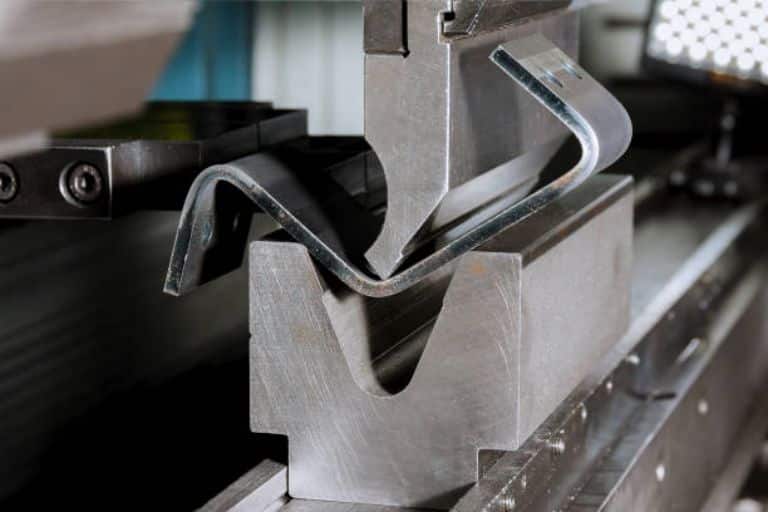
Metal bending forms sheet or plate along a straight line. It uses a machine like a press brake. A punch forces the material into a die opening. This creates the target angle and shape.

Key process parameters include bend angle, bend radius, and forming force. Material properties like ductility and thickness also affect the final result.

CNC press brake bending improves repeatability. The backgauge position, stroke control, and bend compensation are applied consistently. That is why CNC bending is best for batch work where angles and flange lengths must be stable.

Custom Metal Bending Services-Yonglihao Machinery

Metal Bending Applications

Yonglihao Machinery’s bending services support many industries where fit and durability are important. Typical applications include brackets, housings, panels, frames, and structural supports.

FAQ

Most common sheet and plate metals can be bent. Aluminum, steel, stainless steel, brass, and copper are typical options. We confirm feasibility based on thickness, bend radius, and geometry.

Our standards follow ISO 2768. The bend-to-edge/hole tolerance on a single surface is typically ±0.254 mm (±0.010 in.). Multi-bend parts add stack-up, so we confirm datums and sequence during DFM.

Our standard rule is to set the inside radius equal to the material thickness. This helps reduce cracking and improves repeatability. Exceptions can apply for special designs.

The typical lead time is 5 days or more. Finishes, thicker materials, and higher inspection needs can extend this time.

We can provide parts ready for assembly through secondary operations. Common needs include deburring and surface finishing, depending on your application.

Scroll to Top