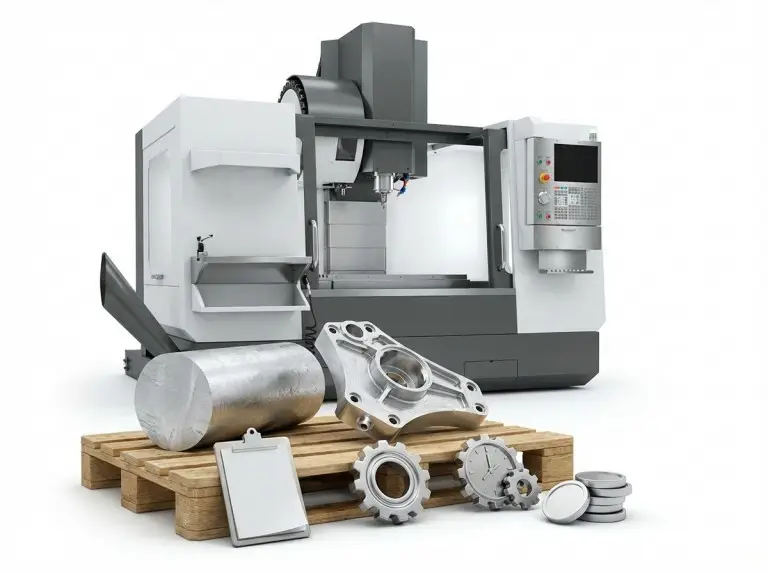
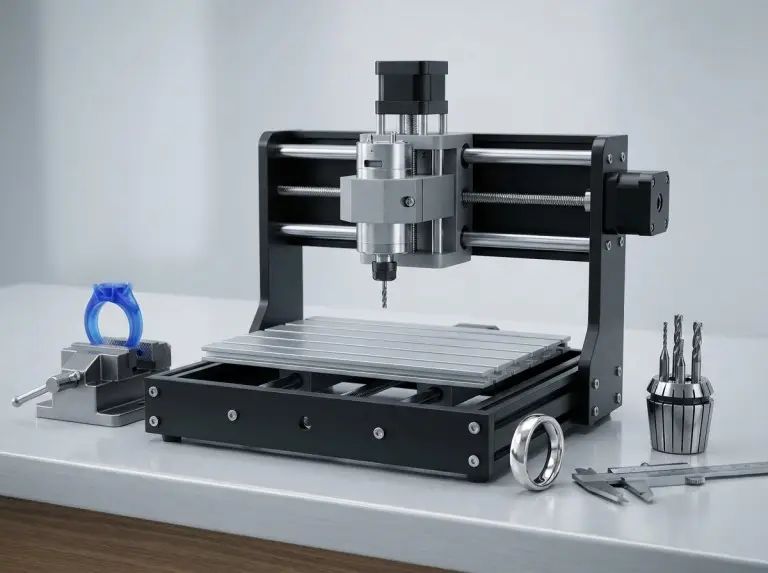
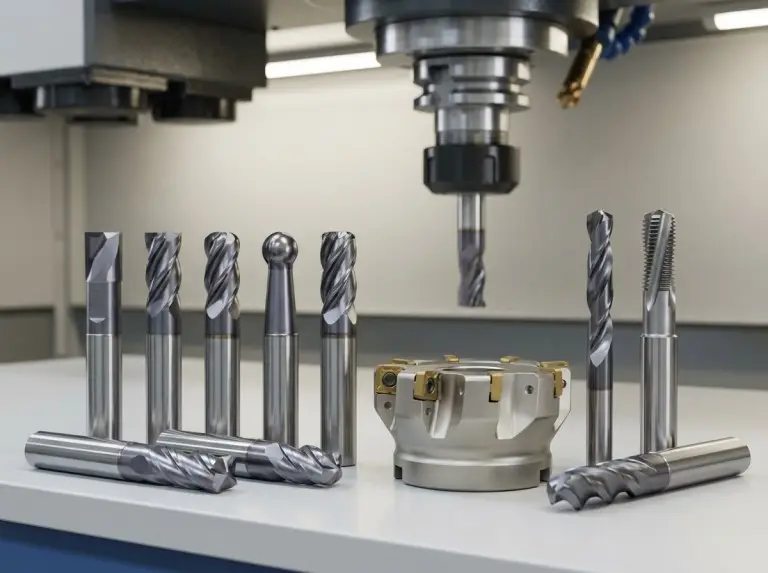
Yonglihao Machinery understands the critical role of threading in the manufacturing process. Thread machining involves the formation of helical ridges, known as threads, on the internal or external surface of a workpiece. These threads are vital for making secure, precise connections. They are used in many types of mechanical assemblies and so are crucial in industries like aerospace, automotive, electronics, and construction.
Threads can be internal (female) or external (male). They are used to fasten parts together and to ensure that they stay securely connected in varying conditions. Thread machining processes include several techniques. These include tapping, thread milling, thread turning, and thread grinding. Each is suited to specific materials and accuracy needs. By using the proper threading process, manufacturers can make high-quality, durable threads. These threads meet the strict requirements of specific applications.
In this guide, we’ll take an in-depth look at the various types of thread machining processes, their applications, and best practices. Understanding these elements helps you optimize your manufacturing process. It lets you make parts that meet high quality and performance standards.
What Is Thread Machining in Part Manufacturing?
Thread machining is a precise process that removes material to create helical ridges (threads) on a workpiece. These threads enable connections, allowing components to move relative to each other while staying secure. Threads are used in everything from bolts to turbines. In manufacturing, thread machining is often paired with CNC machines for high precision and repeatability. For example, in automotive engines, threads connect the cylinder block and screws, enduring extreme temperatures and pressures.
Threads serve three main purposes: fastening, sealing, and transmitting motion. Unlike milling, thread machining focuses on helical geometry to ensure compatibility.
Main Parameters of Threads
Thread parameters are critical to thread design and machining. They impact strength, compatibility, and performance. These include dimensions and angles, which must be precisely controlled during CNC programming and quality checks. Optimizing these parameters reduces stress, improves durability, and ensures compatibility with standard threads. Below is a breakdown of the main parameters:
Helix Angle
The helix angle is the angle between the thread axis and the helix line. For straight threads, it ranges from 5 to 30 degrees. For tapered threads, it involves the conical surface. This angle affects self-locking and torque transmission. In high-load applications like aircraft engines, a larger helix angle improves vibration resistance but makes machining harder. The formula is: tan(α) = (π × d) / l, where d is the diameter and l is the lead.
Root
The root is the starting point of the thread, located near the cylinder or cone. It forms the foundation of thread strength. A shallow root can cause stress concentration and fractures. In electronic component machining, deepening the root design improved fatigue life by 20%. The root diameter (minor diameter) is a key measurement, often checked with calipers or coordinate measuring machines.
Crest
The crest is the top of the thread, farthest from the base. It connects the thread surfaces on both sides, ensuring smooth assembly. The crest’s flatness affects friction and sealing. For example, in construction bolts, a rough crest increases assembly resistance. The crest diameter (major diameter) defines the thread’s outer contour.
Flank
The flank is the straight section connecting the root and crest, usually parallel to the axial plane. It influences load-bearing capacity and wear rate. Optimizing the flank angle can reduce wear by 15–25%. In precision instruments, a precise flank angle ensures even stress distribution. The thread angle, typically 60 degrees (ISO standards), defines the flank’s slope.
Pitch
Pitch is the axial distance between two adjacent threads, measured in parallel areas. Fine pitches (1–2mm) suit high-precision applications like electronic connectors. Coarse pitches work better for high-strength needs, such as building structures. Pitch affects thread count and torque control.
Pitch Diameter
Pitch diameter is the average of the major and minor diameters. It ensures precise engagement between internal and external threads. The formula is: Average diameter = (major diameter + minor diameter) / 2. In aerospace components, precise pitch diameter reduces vibration by 5%.
Thread Height
Thread height is the radial distance from the root to the crest. It affects strength and material use. For 60-degree threads, the standard height is 0.541 times the pitch. In mass production, shorter thread heights simplify machining and save materials.
Thread Angle
The thread angle is the angle between the flanks. It’s usually 60 degrees (ISO/UTS standards) but can vary. For example, 55 degrees (Whitworth standard) is used in specific applications. The angle affects strength and self-locking properties.
Optimizing these parameters depends on the material. For instance, controlling pitch on aluminum alloys prevents deformation. Simulating parameters in CAD software can predict performance issues before machining, ensuring efficient production.

Types Of Machining Threads
Different classification systems have different names for different types of threads. UNF threads are thinner and UNC threads are coarser. They are both standards for a uniform threading system. However, internal and external threads are the two main types.
Internal Threads
Single-lip threading tools are used for internal threads, also known as female threads. Plain thread caps can also be used with single-lip tools to cut CNC internal threads. Keep in mind that cutting internal threads can only be done on a concave surface.
So, when do you need female threads? Female threads are needed if your workpiece requires mounting screws. To cut internal threads you can use either a hand tap or a machine tap.
External Threads
This type of thread is used for screws, bolts, nuts, and plug gauges. It is also known as external threads. one of the best ways to make external threads is to use a lathe.
You can also cut external threads by hand using a round die. In this case, the round die used will remain in a set of molds. In addition to round dies, triangular and square dies can be used together.
How to Cut Machining Thread
Cutting threads is the best way to make threaded parts. It is helpful to know how to cut threads. For example, you can use this information to make a single-piece screw or nut. Also, you can repair a screw or nut if it breaks. In addition, threading tools may not be readily available.
How to Cut Internal Threads
Want to cut female threads inside your machine? First choice, make sure you have the right tools. Machine tapping requires safety goggles, a square pillar drill, an adjustable tap wrench, an internal thread tap, a twist drill, and a 90-degree countersink.
Once you have the right tools, the next step is to determine the size of the hole in which you want to install the threads. Once you know the width, the next step is to find the right tap for the cut. Take the tap diameter and remove the thread pitch to get the core hole diameter.
Center the part with a hole punch and then drill the core hole with a twist drill. This is the first step in cutting the female threads. Since a 90-degree countersink is used, a chamfer can be made in the female hole. To cut the threads, insert a tap wrench with a tap attached to the core hole.
How to Cut External Threads
To cut a male thread, you will need a file, a die, a flat die, a round die, a rod, a vise (to hold it in place), and a cutting spray. Before chamfering the round rod at 45 degrees, file the ends of the rod with a file. This will allow you to cut the male threads. It is important that the edge is greater than the depth of the threads.
The next step is to clamp or hold the round die to make sure it is secured in place. This will stop unwanted movement. This is because the round rod requires a lot of force to properly cut the external threads. For a better surface on the workpiece, you can use a cutting spray.

Common Screw Thread Machining Methods In CNC Process
Understanding the different threading processes will help you choose the right method for your needs. It will also ensure the production of high-quality, reliable threaded parts. Below is a description of the processes we have put together:
Tapping
Tapping involves the use of a tap to cut internal threads and is one of the most common methods used to create internal threads. The process can be performed manually using a manual tap-and-tap wrench or mechanically using a tapping machine. A typical procedure involves drilling the initial hole using a twist drill and then cutting the threads using a tap. Manual tapping requires an adjustable tap wrench. Mechanical tapping uses a hand drill or a square column drill to ensure accurate threading.
When discussing the tapping process, one cannot help but think of CNC machining versus manual machining. CNC machining is gradually replacing traditional manual machining methods in many areas due to its high precision and automation advantages. However, manual machining still has an irreplaceable value in some specific applications. By comparing the advantages and disadvantages of these two machining methods, we can better understand their role and importance in modern manufacturing.
Thread Milling
Thread milling uses a rotary milling cutter to create threads and is known for its precision and versatility. This method produces highly accurate internal and external threads. Thread milling has advantages. It can cut a wide range of thread sizes with one tool. In addition, it also offers better chip control and a fine surface finish. It is particularly suited to applications that require high accuracy and flexibility in thread sizes.
Thread Turning
Thread turning is the machining of external threads on a lathe for cylindrical workpieces. This method uses a single-point cutting tool. It cuts threads along the workpiece. It is ideal for making large or custom-sized threads. Thread turning helps make single-piece or small-lot production easier. It does this by making consistent and accurate threads. That’s why many manufacturers prefer it.
Thread Grinding
Thread grinding is a high-precision process. It uses an abrasive wheel to machine threads. It is ideal for fine threads and hard materials. This method ensures very accurate threads. They have excellent surface finishes. It is for applications that need high precision and small tolerances, such as aerospace and high-performance mechanical parts.
Thread Machining Applications
Aerospace
In aerospace, thread machining is crucial. It makes the threads needed for critical parts. Commonly used for turbine blades and airframe components, internal threads are critical for accuracy and strength. Male threads are critical for bolts. They hold structural components together, ensuring the plane’s safety.
Automotive
Tapping and thread rolling are widely used threading processes in the automotive industry. Tapping is used to create internal threads in engine blocks, allowing screws to withstand high pressure and temperatures. Thread rolling is used to make strong external threads. These are for automotive fasteners like bolts and nuts. They provide the toughness and dependability needed for automotive performance.
Electronics Industry
Making threads in electronics requires high accuracy. This is for precise parts. Thread milling is perfect for cutting the threads of electronic components. It ensures precise sizes and a polished surface. We use thread grinding to make precise threads. We use them for connectors and other critical hardware. These parts need accuracy and fine tolerances. These things are crucial for the function of electronic devices.

How to Measure Processed Thread Quality
Measuring thread quality ensures functionality and durability. It affects assembly compatibility, load distribution, and sealing. Accurate measurement prevents failures, such as leaks in the petroleum industry. Below are key techniques and tools:
- Micrometers and Calipers: These tools measure outer and inner thread diameters to ensure they meet tolerances. Digital calipers, with 0.01mm accuracy, are ideal for quick checks. In automotive bolt production, they verify major diameter deviations.
- Optical Comparators: These devices magnify thread profiles for comparison with approved designs. With up to 50x magnification, they detect profile unevenness. In precision electronics, they verify flank angles.
- Thread Gauges: Go/No-Go gauges quickly check if thread dimensions are within limits. The Go gauge should pass smoothly, while the No-Go gauge should not. These are ideal for mass production, taking only seconds per part.
- Coordinate Measuring Machines (CMM): CMMs use contact probes to measure complex geometries with micron-level precision. Automated scanning ensures consistent tolerances. In aerospace, they evaluate thread geometry comprehensively.
Benefits of Precise Thread Measurement
Accurate thread measurement ensures:
- Compatibility: Parts fit correctly, especially in modular designs.
- Load Distribution: Proper engagement reduces wear and extends lifespan.
- Sealing and Safety: Leak-proof threads prevent environmental risks and explosions in industries like oil and gas.
This version removes redundant text while keeping all essential details intact. Let me know if you’d like further refinements!
Thread Machining Best Practices
Toolpath Optimization
Efficient toolpath design is critical to reducing tool wear and improving thread quality. Optimizing toolpaths helps. It ensures smoother transitions and reduces unnecessary movement. This improves the overall efficiency of threading. This not only extends the life of threading tools but also produces threads of higher quality and more consistent accuracy.
Coolant and Lubrication
Good coolant and lubrication are critical. They maintain tool life and ensure high-quality threads. Coolants help dissipate heat made during threading. They prevent overheating and reduce the tool and workpiece’s thermal distortion. Lubrication reduces friction. That cuts tool wear. It makes threading smoother and threads look better.
Tool Maintenance
Regular inspection and maintenance are vital. They prevent defects and ensure consistent thread quality. Routine inspections help detect wear early so that tools can be replaced or repaired promptly. Keeping tools sharp and aligned reduces the chances of making bad threads. It ensures the final product meets the needed specs and standards.
Conclusion
Thread machining is a critical manufacturing process that provides the means to create safe and accurate threaded connections that are essential to the functionality and reliability of mechanical components. From aerospace to automotive and electronics, thread machining processes such as tapping, thread milling, thread turning, and thread grinding ensure that high-quality, durable threads are machined for specific applications.
Choosing the right threading method and maintaining proper tool management are essential to achieving the best results. By optimizing toolpaths, using proper coolants and lubricants, and ensuring regular tool maintenance, manufacturers can improve thread quality, extend tool life, and increase overall machining efficiency.
For more detailed information on threading processes and best practices, please contact us directly to learn how Yonglihao Machinery can support your manufacturing needs.
FAQ
What are the common thread machining processes?
Common types include internal thread tapping. There are also versatile internal and external thread milling. And, there are cylindrical workpiece thread turning. And, there is high-precision thread grinding.
What is the difference between internal and external threads?
Internal threads are cut on the inside of a hole, while external threads are cut on the outside of a cylinder. They fit together to form a secure connection.
How do I choose the right threading method?
The choice is based on the material, the required accuracy and the application. Tapping is for internal threads. Thread milling is for precision threads. Thread turning is for cylinders. Grinding is for fine threads.
Why are coolant and lubrication important in threading?
Coolant dissipates heat and prevents damage to the tool and workpiece. Lubrication reduces friction and improves tool life and thread quality.
What is the best way to maintain threading tools?
Inspect and maintain tools regularly to prevent defects. Replace or refurbish tools as needed to ensure consistent thread quality.