
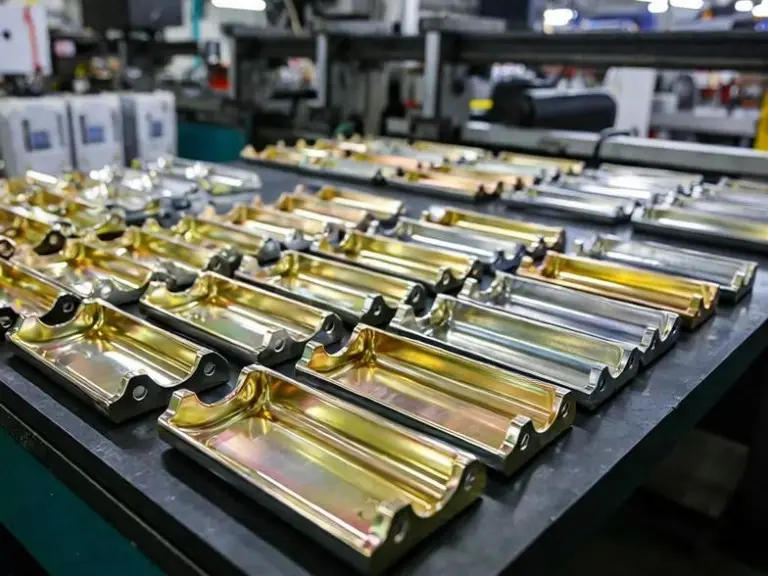
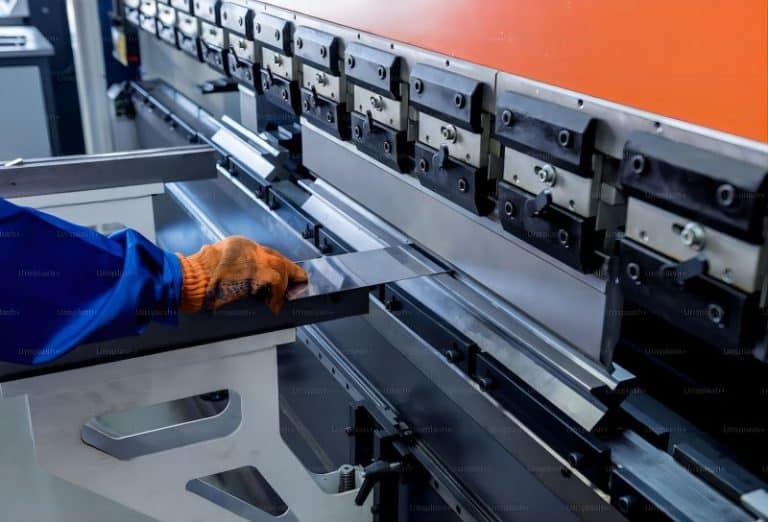
Preventing problems is more important than doing repair work after they occur. Not only does this save time and costs, but it also facilitates the work. Prevention is better than fixing, and this is true in any manufacturing industry, but especially in the metal stamping industry. Metals can break down, rust, be affected by weather, and more. There are several steps in the stamping process that help minimize these possible metal failures. One of these steps is metal surface treatment, also known as metal surface finishing, which increases the safety of the metal.
It is helpful and necessary to understand how to treat metal based on how acidic it is, how it may be exposed, and other factors. In the long run, we can save more cost and time through the metal surface finishing process. In this article, we will detail the advantages of metal stamping surface treatment. As well as the most commonly used types of metal surface treatment in the precision metal stamping process.
What Is Metal Surface Treatment?
Coating a protective or physical layer on a metal surface is called metal surface treatment. In this process, the metal is cleaned, deburred, and polished. This not only makes the metal stronger but also makes these components or parts look more aesthetically pleasing.
Of course, there are some things to consider when treating metal surfaces. For example, the speed of production, cost, and longevity. You need to check that everything is in line with the company’s goals and what the metal parts are used for. That’s why it’s important to plan carefully from the start of metal cutting to the final step.
To help you stay on track, here are the steps for treating metal surfaces:
- First, you need to remove stamping compounds and milling oils from the metal surface.
- Then, use an organic or inorganic sealer.
- Rinse it with deionized water.
- Finally, you can dry it in the oven or air dry to remove moisture.
Why Do I Need to Treat the Surface of My Metal Stampings?
Making precision metal stampings is very important. Therefore, you need to plan to choose a surface treatment method. After this treatment, the metal will last longer and thus be more useful in other areas. It can also help your business grow if you know you are selling good stamped parts.
In addition to the reasons mentioned above, there are many other benefits to having the following treatments applied to metal surfaces:
- Prevents corrosion:Metal that does not rust is a good sign of a strong material that can be used in any situation. Stamped parts must be highly resistant to galvanic, pitting, and crevice rust.
- Improved Appearance: Finishing the surface of the metal can be decorative by making it look better and more balanced. It can be shiny or matte, embossed or plain.
- Improves durability: As we have already said, it makes the metal last longer. It makes the surface of the part harder, which is important when making stampings for medical tools, construction materials, and automotive parts.
- It improves the metal’s electrical properties, resistance to fading, and chemical resistance. All of these benefits increase the value of the metal.
Which Companies Use Metal Finishing?
Metal stamping companies, along with those in the medical, industrial, military, and communications fields, use surface treatment to make their tools, items, and equipment better.
In the electronics industry, it’s used to make covers, plugs, sensors, racks, and other things. You can see them in cell phones, computers, and other electronics. In the medical field, we surface the exteriors of equipment pumps, monitors, surgical tools, and other stamped lab equipment.
The list goes on and on, as the services and methods we use today, along with metal stamping technology, make it possible to create customized, high-quality metal parts.
Choosing the Right Material and Surface Treatment
Now that we have covered the importance and benefits of metal finishing in detail. You should now have a better understanding of how to choose the right method for each material.
We all know that different things require different surface treatments. We have many different kinds. However, there are eight most common methods of surface treatment for metal stampings. These methods are shown below:
Electroplating
Electroplating is a chemical process that utilizes an electric current to apply a small layer of metal to a major metal surface. This method is commonly used to treat surfaces because it can be used on both small and large items. Its purpose is to prevent the metal from rusting to increase the value of the surface and make it look better.
This method is used to treat metal parts of medical and laboratory tools, household appliances, and automobiles. In addition, electroplating is mainly used for different metals such as:
- Common metals such as copper, nickel, tin and zinc
- Rare metals such as gold, silver, palladium, and rhodium
- Hard chrome and cadmium
Chemical Plating
Unlike electroplating, chemical plating does not use electricity. Instead, it uses a chemical process to apply a metallic coating to the metal. Compared to electroplating, chemical plating can be applied more evenly and smoothly. Not only that, but it saves money in the long run.
Nickel is the metal most commonly used for this finish. Most of the parts used in aviation and space travel come from these products. Other industries, such as those that manufacture firearms, also use them. Chemically plated finishes are also used for metal parts made by stamping:
- Aluminum
- Steel
- Copper
- Zinc
- Brass
Chemical Coating
Powder coating is another name for this type of surface treatment. The material is turned into a powder by compressed air, and then the powder is melted to form a smooth protective film on the substrate. Powder coating makes the metal less susceptible to scratching or cracking, is corrosion resistant, and can be used as a metal colorant.
Chemical coatings are widely used for parts in the automotive industry, making them ideal for customer needs. Additionally, aluminum and steel can also be used for this type of surface treatment.
Metal Anodizing
Anodizing is the use of electro-oxidation to cover a metal surface with an oxide film to protect the metal. As a metal surface treatment, anodizing is highly effective in reducing wear and tear, stopping corrosion, and making metal parts stronger and more complex.
On the other hand, it is not good for stamped parts with rough or broken surfaces because it can only cover them evenly. And it is only suitable for aluminum metal parts.
Hot-dip Galvanizing
Hot dip galvanizing is another name for this process. Stamped steel and iron parts are galvanized by placing them in a molten zinc solution. After this process, the metal parts become much more resistant to corrosion. Industries that manufacture metal parts for automobiles and household products prefer the hot dipping method.
Vacuum Metallizing
The method of applying a protective metal cover to a stamped part to make it smooth is known as vacuum metalizing. For this surface treatment to be effective, the metal needs to be placed in a can or other object that can be sprayed with a metallic coating. It gives a mirror-like appearance to the surface and can be used for design and decoration, especially in the aerospace and automotive industries. For this method, aluminum is the most important metal.
Painting
There are many methods of Painting such as spray painting, electrostatic painting, conductive painting, and grease coating. This method of surface treatment is good for preventing rust and rusting and also makes any metal stamping look beautiful.
Thermal Spraying
By spraying molten and heated metal, this finish makes it easier to prevent scratches, flaking, and cracking on the surface of metal parts. It can help large metal stampings bond together.
Further Reading:10 Common Materials Used in Precision Metal Stamping Processes
Summary
Metal finishing makes a big difference to metal stampings. It improves and enhances the quality of stamped parts in terms of service life, appearance, and other factors. This benefits the quality of all producers, suppliers, and customers. Therefore, the surface treatment process of metal stampings is very important.
However, we all know that there are some things to consider when treating the metal surface of stamped parts. In order to avoid getting unwanted results, you should consider some things. Such as how long it will take and when it will be done, as well as the goals and product requirements of your company and partners.
When stamping metal parts, you should never compromise on the accuracy of the part. You should also allow yourself enough time to consider what kind of finish will make your product more valuable and help you build your image. If you need precision metal stamping services, contact us.
Yonglihao Machinery has many years of experience in metal fabrication, and we are always working to create higher-quality metal stampings, components, and wire. We also have a professional service team that can answer any questions you may have. Yonglihao Machinery is committed to providing our customers with courteous and complete service.
FAQ
What Is Metal Surface Treatment?
Metal surface treatment applies a protective or physical layer to enhance strength and aesthetics through cleaning, deburring, and polishing. Key factors include production speed, cost, and longevity to match goals and part usage. Basic steps: remove compounds and oils, apply sealer, rinse with deionized water, and dry.
Why Do I Need to Treat the Surface of My Metal Stampings?
It extends lifespan, prevents corrosion (galvanic, pitting, crevice), improves appearance (shiny/matte, embossed/plain), boosts durability for demanding applications, and enhances electrical, fade, and chemical resistance—adding overall value and supporting business growth.
Which Are the Most Common Types of Metal Surface Treatments for Metal Stampings?
Key methods: electroplating (for rust prevention on metals like copper or gold), chemical plating (even coatings on aluminum/steel), powder coating (scratch-resistant for auto parts), anodizing (aluminum-specific), hot-dip galvanizing (corrosion protection for steel/iron), vacuum metallizing (mirror finish for aerospace), painting (rust prevention and beauty), and thermal spraying (anti-scratch for large parts).
What Is the Difference Between Electroplating and Chemical Plating?
Electroplating uses electric current for thin layers on varied sizes, ideal for medical/appliance parts with metals like nickel or chrome. Chemical plating employs chemicals for uniform, cost-effective finishes, commonly nickel-based for aviation/firearms on aluminum, steel, or brass.
Which Surface Treatment Is Suitable for Aluminum Stampings?
Anodizing excels via electro-oxidation for wear/corrosion resistance and added strength, but requires smooth surfaces. Alternatives: chemical plating for evenness or vacuum metallizing for decorative mirror effects in aerospace/automotive.
What Factors Should Be Considered When Choosing a Metal Surface Treatment Method?
Evaluate speed, cost, durability, objectives, and end-use (e.g., powder coating for auto scratch resistance, electroplating for medical corrosion protection). Account for material (steel/aluminum) and exposure (acidity/weather) to ensure optimal results.
Which Industries Commonly Use Metal Stamping Surface Treatments?
Medical (tools/pumps), electronics (covers/sensors in devices), automotive (durable parts), military, communications, and aerospace. It enables high-quality, customized components for appli


