Yonglihao Machinery offers laser design services. The laser type is a key factor in your cutting results. It often decides if the cut is clean or if you fight slag, burn marks, or long cycles.
Two parts might have the same thickness. But results differ if absorption, reflectivity, or heat flow do not match the laser source. This guide has a simple goal. We will help you understand the main laser cutter types. You will learn what each does best and how to make a practical choice.
What Is a Laser Cutter?
A laser cutter is a CNC system. It focuses a laser beam to melt, vaporize, or ablate material. This creates a kerf, or cut width.
“Laser type” usually refers to the source, like fiber, CO₂, crystal, or diode. This choice defines the wavelength and beam traits. It also dictates how energy works with different materials.
The same machine performs differently based on the material. It depends on how well the material absorbs the wavelength. It also depends on if the beam stays focused through the thickness.
Core Performance Factors
Wavelength and absorption: Good absorption makes the process stable. Poor absorption forces higher energy use. This makes edge consistency harder. Reflectivity and heat flow amplify these differences in metals.
Beam quality and focusing: A “tighter” spot means a narrower cut. It makes fine details stable. Small holes and narrow slots form better. On thick plates, energy density affects the cut taper and bottom dross.
Process ecosystem: Many factors decide long-term stability. These include assist gas, nozzle position, slag removal, fume extraction, and cooling. You need more than just a good cut on day one.
Main Types of Laser Cutters
Fiber Laser Cutter
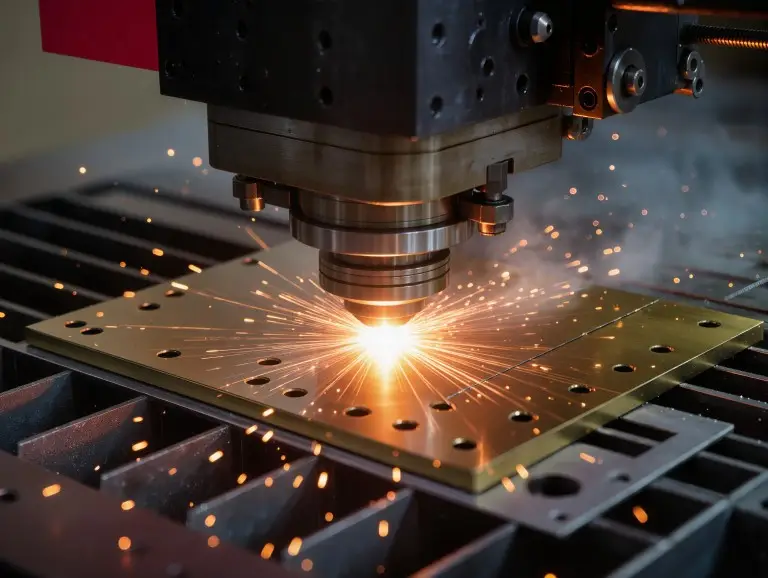
Fiber lasers use the near-infrared spectrum (around 1.06 μm). Doped fiber delivers and amplifies the beam. This creates a high energy-density spot. They work best for metal cutting. They offer speed, repeatability, and crisp edges.
Fiber is often the first choice for stainless steel, carbon steel, aluminum, copper, or brass. It reaches a stable processing window easily for these metals. It handles high-volume work well. It is great for dense hole patterns, narrow slots, and complex contours. It also suits structural parts where low heat distortion matters.
The limit is rarely “can it cut.” The question is usually about cleanliness and cost. CO₂ is often better for wood, acrylic, leather, and textiles. It gives a better visual edge. Using fiber for those jobs often requires more trial cuts. Cosmetic consistency is harder to maintain.

CO₂ Laser Cutter
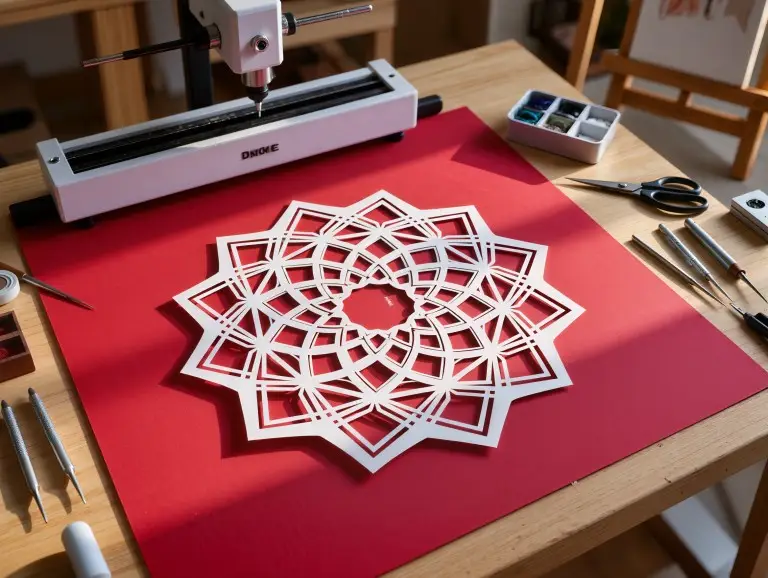
CO₂ lasers run at 10.6 μm. Organic materials and polymers absorb this wavelength well. This makes CO₂ very good for non-metal cutting and engraving. Wood, cardboard, leather, fabrics, and acrylic get natural edges and sharp details.
Choose CO₂ for engraving resolution and visual texture. It is common for signage, display parts, tooling pads, and packaging die boards. It controls transparent materials well. You still need good fume extraction to avoid smoke stains.
Metal processing is harder with CO₂. The optical path is sensitive to dirt and alignment. We stress maintenance and cooling for service work. Otherwise, engraving contrast drifts and edge color varies.

Nd:YAG / Nd:YVO (Crystal) Laser
These solid-state systems often use pulsed mode with high peak power. They are not for cutting large sheets. They excel at fine detail with controlled heat. This includes precision marking, micro-features, and surface work.
Crystal lasers are common in electronics and medical devices. Use them for mark clarity and surface reaction control. They pair with refined pulse strategies for stable surfaces, not speed.
Crystal lasers are often less economical than fiber for general metal cutting. They are special-purpose tools. They work well in the right window but are not a universal choice.

Direct Diode Laser
Direct diode lasers make light from semiconductor diodes. They offer high efficiency and a compact design. They work well for thin sheets and some plastics. The machine needs strong beam shaping.
Performance depends heavily on the system. Beam quality varies by manufacturer. Direct diode may not be better than fiber for fine cuts or thick plates. Test with sample parts before you choose.

| Laser type | Best fit | Typical strengths | Common constraints |
|---|---|---|---|
| Fiber | Metals (incl. reflective) | Fast metal cutting, tight kerf, repeatable geometry | Less efficient on many non-metals |
| CO2 | Non-metals + engraving | Strong engraving, clean cuts on organics/polymers | Reflective metal window is harder |
| Nd:YAG/Nd:YVO | Marking/micro work | Pulse control, precise marking, specialized tasks | Not the most economical for broad cutting |
| Direct diode | Thin metals / select plastics | High efficiency, compact design | Beam quality/thickness capability varies |
How to Choose the Right Laser Type
Sort by material first. Then focus on your target output. Fiber is usually best for metal parts and speed. CO₂ reduces trial-and-error for wood, acrylic, or fabrics.
Next, look at the specific output you need. Are you cutting load-bearing parts? Then kerf and dross matter. Are you making display parts? Then texture and edge color matter. Priorities shift based on the outcome. This is why people often choose the wrong type.
Key decision inputs:
- Material: Metal vs. non-metal. Is it reflective or conductive?
- Geometry: Do you have small slots, sharp corners, or thin walls?
- Edge: Do you need cosmetic, weldable, or tight-fit edges?
- Goal: Do you need prototypes or repeat stability?
- Shop limits: Consider gas supply, extraction quality, and maintenance.
Cutting vs. Engraving vs. Marking
- Cutting goes through the material. You care about geometry, dross, and taper. Edges must stay stable for assembly parts. Holes must stay in place. Thin areas must not warp.
- Engraving focuses on depth and definition. Smoke and heat affect the look. CO₂ often wins for non-metals. It gives clearer textures. For metals, pulse strategy decides readability and wear resistance.
- Marking changes the surface. You want contrast and readability. Depth is not the main goal. Crystal lasers often work best here. Traceability codes need durability, not cutting speed.
Common Traps
Most wrong choices start with “power” instead of results. Validate stability with real samples first. See if the process holds up.
- Reflective metals: Copper and aluminum are sensitive. Stability and gas strategy matter more than power.
- Heat-sensitive polymers: Some plastics cut clean. Others melt. Test a small piece first.
- Extraction: Poor fume removal hurts the finish. It also dirties the optics.
- Cooling: CO₂ needs stable cooling for good engraving.
- Assist gas: Oxygen speeds up some steels but changes edge chemistry. Nitrogen keeps edges cleaner. This matters for welding or looks.
Conclusion
Start with fiber for metal cutting, speed, and consistency. This applies especially to aluminum, copper, and brass. Start with CO₂ for non-metal cutting and engraving looks. Crystal and direct diode are for marking or thin sheets.
Once you have the right type, you can optimize settings. Adjust power, gas, focus, and speed for stable results. Do not force parameters to fix a mismatch. This shortens trial cutting and stabilizes lead times.
Yonglihao Machinery can help. We act as your rapid prototyping partner. We will help you pick the right laser type. Then we optimize the settings to get stable samples faster.
FAQ
CO₂ vs Fiber: which first?
Start with fiber for metals. Start with CO₂ for non-metals. Then let thickness and edge needs decide the final choice.
Why is fiber good for copper and brass?
Fiber systems couple energy into metals well. They keep a tight spot. This reduces unstable events when heat flow is tricky.
Can a CO₂ laser cut metal?
Yes, but the window is small. It depends on the material and setup. Fiber is usually the better standard choice.
When should I use Nd:YAG / Nd:YVO?
Use them for precise marking or micro-features. They manage heat well. Choose them when mark quality matters more than speed.
What info do you need to pick a laser type?
Tell us the material grade and thickness. Give us the minimum feature size. Tell us the process (cutting, engraving, or marking). Add quantity and edge requirements. We can then select the right laser fast.