Yonglihao Machinery specializes in rapid manufacturing. We primarily use laser cutting for clean and fast profiles. However, many projects begin with thick plates, and oversized parts often require a thermal cut first.
Plasma and flame cutting separate steel quickly. They work in different ways. They leave different edge conditions. Picking the wrong process costs you time. You might face grinding, distortion, or poor fit-up later.
This guide focuses on one decision. Plasma vs. flame cutting—what should you choose? We cover basic theory first. Then, we discuss differences, selection, and troubleshooting.
Which One Should You Choose?
Choose Plasma for thin to medium, conductive metals. It offers a cleaner edge and better control.
Choose Flame cutting for thick carbon steel. It is great for portability and low cost.
Remember this: Plasma wins on versatility and edge quality. Flame wins on thick carbon steel and portability.
|
Job requirement |
Plasma is usually the better fit |
Flame is usually the better fit |
|---|---|---|
|
Material |
Conductive metals (mild steel, stainless, aluminum, copper). |
Carbon steel, low-alloy steel, cast iron. |
|
Thickness |
Thin to medium plate. Edge quality matters here. |
Thick plate (often over 1 in / 25 mm). Heavy sections. |
|
Edge cleanup |
You want less grinding. You need a narrower kerf. |
Wider kerf is acceptable. You can remove slag and scale. |
|
Work location |
Stable power. Controlled shop setup. |
Fieldwork. You need mobility and have limited power. |
|
Cost focus |
Higher costs work for throughput. |
Lowest initial cost. Uses oxygen and fuel gas. |
What Is Plasma Cutting?
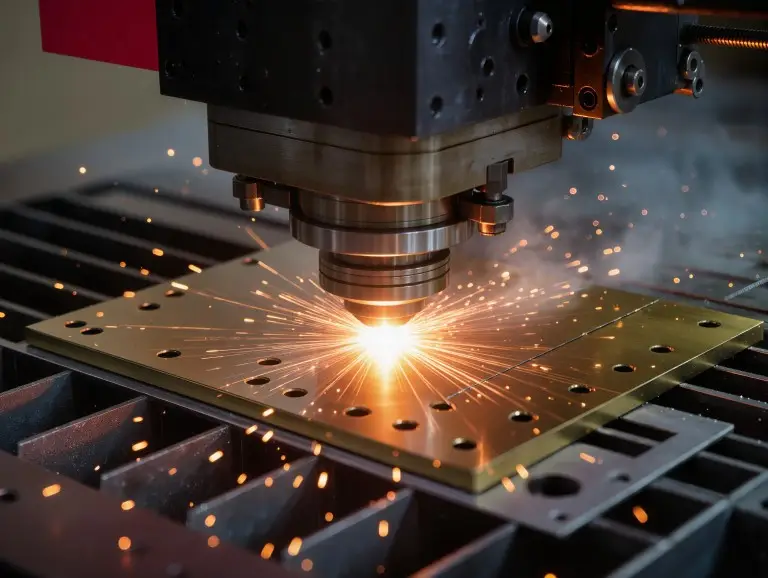
Plasma cutting is the best thermal method for fast cuts. It works well on conductive metals. It uses an electrical arc and ionized gas. This creates a plasma jet. The jet melts the metal. It blows the metal out of the cut.
Compressed gas flows through a tight nozzle. This gas is often air, nitrogen, oxygen, or argon. An electric current turns the gas into plasma. A grounding clamp connects the workpiece to the circuit. Plasma arc temperatures reach about 30,000°F. This high heat explains the speed on thin material.
CNC tables automate plasma easily. Nesting software helps with repeatable profiles. Cut quality depends on consumables and setup. The nozzle and electrode shape the arc. Worn consumables cause problems. You might see more bevel or rougher edges. The cut width may also change.
Plasma has two practical limits. First, the material must be conductive. It needs to complete the circuit. Second, thick plates are harder to cut. You can still sever the plate. However, bevel and dross increase. Consumable wear becomes harder to control.
What Is Flame Cutting?
Flame cutting (oxy-fuel) is best for thick carbon steel. It is also great when portability matters. It uses fuel gas and oxygen. This preheats the steel. Then, a high-pressure oxygen jet hits the metal. This oxidizes it and ejects slag.
The cut starts with a neutral flame. This heats steel to its ignition temperature. It does not fully melt the steel. The operator then triggers the oxygen stream. This intensifies the reaction. The “cut” is an oxidation reaction. It is not just melting.
Common fuel gases include acetylene, propane, propylene, and natural gas. These affect preheat speed and cost. Flame cutting handles very thick steel. You need the right tips and gas flows. Many shops cut well above 1 inch. Ranges like ⅛ in to 22 in are possible ranges. Some setups can cut up to two feet thick.
Flame cutting is powerful on thick plates. It is simple to use. Its main limit is material type. It works mostly on carbon steels and cast irons. Low-alloy steels also work. Heat effects are another issue. It can leave a decarburized layer. It also creates a larger heat-affected zone (HAZ). Critical work needs cleanup.
Plasma vs. Flame Cutting: Key Differences
Material compatibility
Plasma works on most conductive metals. This includes stainless steel and aluminum. Flame cutting is mostly for carbon steels. It also cuts cast irons and low-alloy steels. Plasma is safer for mixed-metal jobs. It reduces planning risks.
Thickness and edge reality
Flame cutting specializes in thick plates. It stays cheap as thickness grows. Plasma is best on thin to mid plates. Edge quality remains high there. Typical setups work best around 3/16 in (≈5 mm). High-end systems can go thicker with good control.
Cut quality
Plasma usually makes a narrower cut. It leaves less scale. Fit-up and finishing are faster. A stable arc and correct speed help. Edges stay clean. This reduces grinding needs. Heat input is lower on thin work. The HAZ is smaller.
Flame cutting leaves more slag. It creates a wider cut. It also adds more heat. This distorts thin parts. It enlarges the HAZ. Welding or machining comes next. Edge condition drives the cost.
Speed and total job time
Plasma is faster on thin material. CNC control keeps it accurate. Plasma speed drops on thick carbon steel. Bevel cleanup increases. Flame can be more productive overall. Consider handling, preheating, and finishing.
Cost, automation, and portability
Plasma systems cost more. They use electricity and parts like electrodes. Flame cutting equipment is cheaper. It uses oxygen and fuel gas. Basic plasma units cost around $850–$1,700. Basic oxy-fuel sets cost $230–$500. Brand and capacity change these numbers.
Plasma fits automation well. Repeatability matters for many parts. Flame fits field portability. Use it for large parts. Your workflow decides the method. Material matters too.
How We Choose in Practice?
To choose between plasma and flame cutting, consider the following five key factors in order:
- Material: Start by identifying what you need to cut. Plasma works best on conductive metals like mild steel, stainless steel, aluminum, and copper. Flame cutting is mostly for carbon steel, low-alloy steel, and cast iron.
- Thickness: Assess the thickness of the plate. Plasma excels at thin to medium plates where edge quality is important. Flame cutting handles thick plates (often over 1 inch/25 mm) and heavy sections with ease.
- Edge Quality: Decide how much edge cleanup you can accept. Plasma offers cleaner edges and less grinding. Flame cutting leaves a wider kerf and requires more slag and scale removal.
- Location: Think about where the work happens. Plasma is better if you have stable power and a controlled shop setting. Flame cutting is ideal for fieldwork, where portability and limited power may matter.
- Downstream Work: Consider the next steps after cutting. If your job requires precise fit-up and less secondary grinding, plasma is preferred. If you can handle extra edge prep or plan to machine the edge, flame is a good option.
By following this order—material, thickness, edge quality, location, and downstream work—you will make the right choice for your job. Avoid choosing a process just because it is available, as that often leads to extra rework.
Common Problems
Setup causes most issues. Check settings to prevent scrap. You need ventilation and PPE. Both processes make hot particles and fumes.
- Plasma: Wrong speed causes dross. Worn consumables do too. Bevel increases if the torch is not square. Weak grounding hurts quality. Check air quality and torch alignment. Inspect consumables.
- Flame: Poor preheat causes slag. Incorrect oxygen flow makes rough edges. Heat management affects distortion. This happens on thin parts. Check tip condition. Verify preheat stability. Plan your cut sequence.
Before starting any cutting operation, perform the following checks:
- Confirm material type and thickness first.
- Match tip size to thickness. Adjust gas settings.
- For plasma, verify clean air. Ensure solid grounding.
- For flame, use a clean tip. Ensure stable preheat.
- Make a sample cut. Check the edge and cleanup needs.
Conclusion
Plasma and flame cutting solve different problems. Plasma is best for conductive metals. It cuts faster on thin plates. Edges are cleaner. Flame cutting suits thick carbon steel. It offers portability and low cost.
Yonglihao Machinery delivers custom laser cutting services. We focus on prototypes and small batches. Thermal cutting is sometimes needed. We match the process to the material. We consider thickness and quality needs. This protects lead time. It reduces surprise grinding.
FAQ
What is the main difference between plasma and flame cutting?
Plasma uses an electrical arc. It ionizes gas to melt metal. Flame cutting uses oxygen and fuel. It preheats steel. An oxygen jet then oxidizes it. The mechanism creates different edges.
Which cutting method is more precise?
Plasma is more precise on thin plates. It makes a narrower cut. There is less distortion. Flame cutting works for heavy structures. It needs more cleanup.
Can plasma cutting be used on all metals?
Plasma works on conductive metals. Examples include mild steel and aluminum. Copper works too. It does not cut non-conductive materials. Thickness controls quality.
What are the biggest advantages of flame cutting?
Flame cutting is portable. It is simple and cheap. It cuts thick carbon steel easily. Other methods struggle with this. It is common for field repairs.
Is plasma always faster than flame cutting?
Plasma is faster on thin material. Flame can be faster on thick steel. Consider total job time. Include cleanup and bevel work. Thickness decides the answer.
What edge prep should I plan for?
For plasma, remove dross. Check the bevel. For flame, remove slag and scale. Consider the heat-affected zone. Critical welds need more prep.
What safety considerations matter most?
Plasma involves high current, hot slag, and fumes, so grounding and ventilation matter. Flame cutting uses oxygen and fuel gas, so leak checks, flashback protection, and fire control are essential. For both, use proper PPE and keep combustibles away from the cut zone.