
At Yonglihao Machinery, we are a prototyping service provider. While laser cutting is our main process for most sheet and plate work, there are certain jobs where we still use oxy-fuel cutting. Also known as flame cutting or torch cutting, this method remains valuable in our workflow.
We rely on oxy-fuel for thick carbon steel. When parts need to be prepared for welding, this method is especially effective. Portability is another key advantage, making oxy-fuel our choice for jobs in the field. Managing lead times for heavy plate becomes easier with this process. Meanwhile, for thinner metals where precision is crucial, laser cutting remains our top option.
In this article, you’ll find a clear explanation of the oxy-fuel process. You’ll learn about its practical uses, its limitations, and how to determine when it’s the right choice for your project.
What Oxy-Fuel Cutting Is?
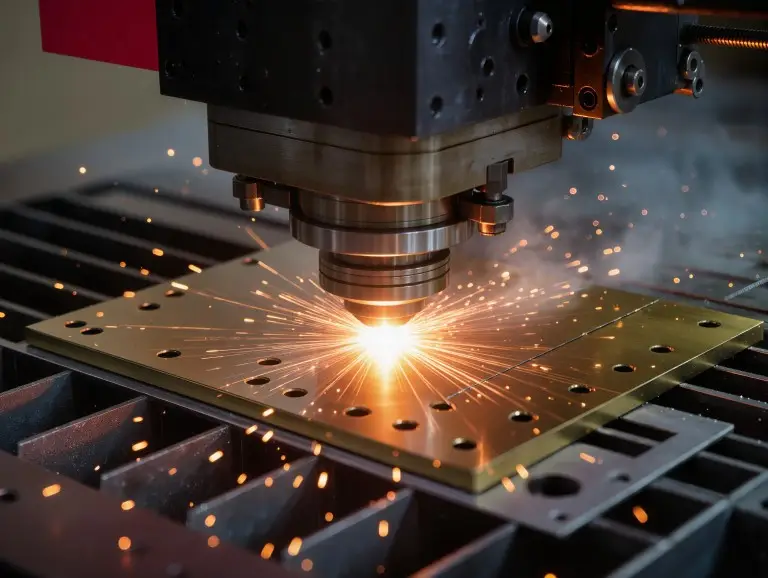
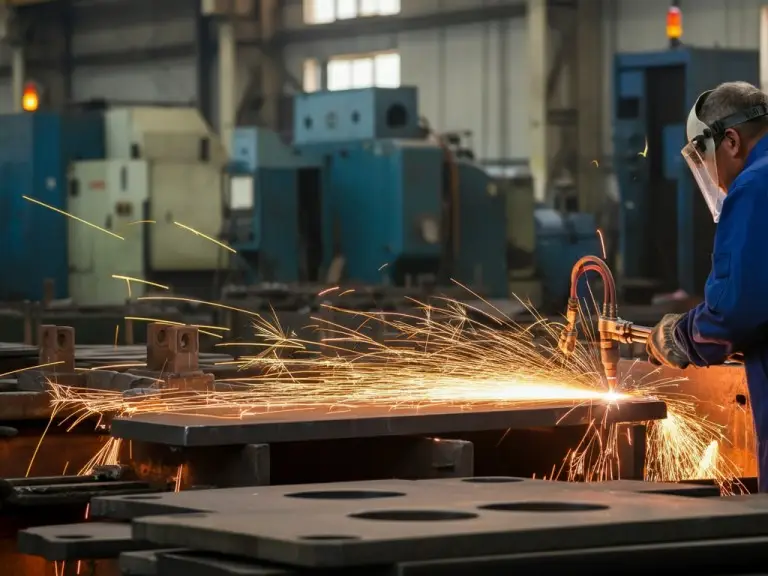
Oxy-fuel cutting is a thermal process that uses a fuel-oxygen flame to preheat steel. After reaching the right temperature, a jet of pure oxygen oxidizes the metal, forcing it out of the cut as slag. This combination of heating and oxidizing forms the basis of oxy-fuel cutting.
This process works best on mild steel and many low-alloy steels, as their oxides form and can be removed cleanly. You can use it for a wide range of thicknesses, from 0.5 mm to 250 mm. With special systems, it’s even possible to cut metal much thicker than that.
We often recommend oxy-fuel cutting for steel that’s too thick for lasers to handle effectively. Creating beveled edges for welding is another situation where this method excels. Additionally, when a cut edge will be machined later, using oxy-fuel cutting remains a smart choice.
How Oxy-Fuel Cutting Works?
Oxy-fuel cutting is a form of controlled, rapid oxidation. First, the steel is heated to its ignition temperature. This is typically between 700–900°C, a bright red heat below its melting point.
Then, a stream of cutting oxygen starts a chemical reaction. This reaction creates heat, forms iron oxide, and pushes it out of the cut. The oxygen jet does not simply melt a groove. Instead, it supports the oxidation and pushes the molten oxide away.
A clean cut relies on four key principles.
- First, the material’s ignition temperature must be below its melting point. Otherwise, it would just melt and flow instead of cutting cleanly.
- Second, the oxide’s melting point must be lower than the base metal. This allows it to be blown out as a fluid slag.
- Third, the reaction must release enough heat to keep the cut front at ignition temperature.
- Fourth, the reaction should produce few gases. Gases would dilute the cutting oxygen.
This is why oxy-fuel works well on mild and low-alloy steel. It is less effective on metals that form stubborn oxides. Stainless steel, cast iron, and non-ferrous metals create oxides that do not blow away easily. Special methods like powder-assisted cutting can help, but we consider them exceptions.
Key Components and What Each One Does
While an oxy-fuel system may look simple at first, each component serves a specific and important purpose. These parts work together to determine cutting speed, edge quality, and overall stability. As a result, it is essential to begin your troubleshooting by focusing on these key areas to achieve the best results.
- Oxygen supply (cutting oxygen):Cutting speed and edge quality depend mainly on oxygen purity. To achieve the best results, your cutting oxygen should be at least 99.5% pure. Even a slight drop in purity can make a big difference: it weakens the reaction’s intensity and interrupts slag removal. For example, if oxygen purity decreases by just 1%,cutting speed can drop by about 15%, and gas use can increase by about 25%.
- Fuel gas supply (preheat): Fuel gas provides the heat to bring steel to its ignition point. It also keeps the cut front hot. Different fuel gases change how fast a cut can start. They also affect how heat is spread. A hotter, focused flame tends to pierce faster and create a smaller heat-affected zone.
- Torch and nozzle/tip:The torch mixes fuel and oxygen for the preheat flames and also forms the central cutting-oxygen jet through the tip. The design of the nozzle is particularly important because it protects the oxygen jet from mixing with air, which affects edge quality. Furthermore, the tip’s condition often becomes a common cause of problems—wear, spatter, or a blockage can quickly turn a good process into a rough one.
- Regulators, hoses, and safety hardware: play a vital role in both safe and consistent operation. While regulators control pressure and flow to the torch, helping to prevent issues like slag, poor bevels, or flame instability, hoses, check valves, and flashback arrestors are also essential for reliable performance. Since oxy-fuel cutting uses combustible gases and high-energy flames, it is always necessary to inspect these parts thoroughly. Whenever a cut becomes inconsistent, our first step is to check pressures and carefully examine the related hardware.
- Fuel gas choice:During combustion, fuel gas creates two heat zones: an inner cone (primary combustion) and an outer flame (secondary combustion using air). As a result, when you compare fuel gases, consider not only flame temperature but also the fuel ratio and the way heat is distributed.
|
Fuel gas |
Max flame temperature (°C) |
Oxygen-to-fuel ratio (vol) |
Heat distribution (kJ/m³) Primary |
Heat distribution (kJ/m³) Secondary |
|---|---|---|---|---|
|
Acetylene |
3160 | 1.2:1 | 18,890 | 35,882 |
|
Propane |
2828 | 4.3:1 | 10,433 | 85,325 |
|
MAPP |
2976 | 3.3:1 | 15,445 | 56,431 |
|
Propylene |
2896 | 3.7:1 | 16,000 | 72,000 |
|
Natural gas |
2770 | 1.8:1 | 1,490 | 35,770 |
Acetylene tends to pierce fastest. It has a very hot and intense primary flame. Propane and natural gas pierce slower but can be cheaper. They burn cleanly with the right tips. MAPP and propylene are middle options. They are chosen based on availability or heat needs.
Main Types of Oxy-Fuel Cutting
Manual Torch Cutting
Manual torch cutting is a handheld process. It uses cylinders, regulators, and a torch without motion control. It is best for jobs that need portability. This includes field work, repairs, and demolition. It works well in places without reliable electricity. It is not good for tight accuracy, repeating parts, or precise holes.
Success depends on operator skill. The torch angle, standoff, and travel speed must be steady. This keeps the oxygen jet aligned with the cut. For prototypes, we use manual cutting as a quick tool, not for precision work.
Mechanized Straight Cutting
Mechanized cutting uses a carriage or CNC machine. It controls the torch’s height, path, and speed. This leads to stable and consistent cuts on plates. It is a good fit for production work where repeat results matter. This is especially true for thicker plates. It is less suited for thin sheets, where laser cutting is faster and more detailed.
Mechanized systems also make it easier to set standard parameters. This is important because oxy-fuel is sensitive to speed and oxygen quality. Mechanization reduces errors from operator differences.
Bevel Oxy-Fuel Cutting
Bevel cutting creates angled edges for welding. This can include V, Y, X, or K bevels. It is a great option for thick parts that need weld preparation. It is not the best choice for jobs needing minimal heat input. It is also not ideal for cosmetic edges or final-sized features.
Bevel cutting adds more variables to control. These include bevel angle, cut geometry, and edge squareness. For these reasons, mechanized setups and proper tip care are helpful. In prototyping, bevel cutting often saves time on downstream weld prep.
Multi-Torch Oxy-Fuel Cutting
Multi-torch cutting runs several torches at once. This increases output for repeated parts on a single plate. It is useful when part geometry repeats and the plate is thick. It is less flexible for jobs with a high mix of different parts. There, setup time can increase costs.
These setups also require a very stable gas supply. Uneven flow can cause uneven edge quality across the torches. If one torch performs poorly, check its tip, alignment, and oxygen stream first.
|
Type |
Best use |
Typical limitation |
|---|---|---|
|
Manual torch |
On-site, repairs, quick cuts |
Operator-dependent accuracy |
|
Mechanized straight |
Stable plate cutting |
Less attractive on thin sheet detail |
|
Bevel cutting |
Weld-prep edges on thick steel |
More heat input, more variables |
|
Multi-torch |
High throughput on repeats |
Setup complexity for mixed jobs |
How We Decide Between Oxy-Fuel and Laser Cutting?
We choose between oxy-fuel and laser cutting based on four factors. These are thickness, geometry, edge quality, and later processes.
Laser cutting is usually our first choice. It is great for tight tolerances and complex shapes on thinner material. Oxy-fuel becomes a better option as thickness increases. It is also preferred when bevels are needed for welding. We also use it if the cut edge will be ground or machined.
Here is the quick logic we use for prototype jobs. If the part is thick mild or low-alloy steel, oxy-fuel is fast and cost-effective. A common industry view is that oxy-fuel is best for steel over 2 inches (50 mm) thick. It is a good choice if plasma cutting quality is not enough. If you need detailed internal shapes or clean, small holes, laser is the better choice.
Use oxy-fuel when:
- The material is mild steel or low-alloy steel.
- Thickness is heavy and the economics are favorable.
- The edge will be welded, beveled, or machined.
- Portability or low setup needs are important.
Use laser when:
- Geometry includes tight curves, fine slots, or small holes.
- You need minimal finishing and tight dimensional control.
- The material is thin to medium thickness.
Best Practices and Common Cut Problems
Good oxy-fuel cutting depends on controlling a few variables. These are oxygen purity, nozzle condition, preheat balance, travel speed, and torch height. If any of these change, the cut quality will suffer. You might see slag, bad drag lines, or bevel errors.
Here are the checkpoints we use to get consistent results.
Best-practice checkpoints
- Start with oxygen quality and the oxygen jet: If the oxygen stream is weak or turbulent, the cut will fail. This shows up as heavy slag, rough cut faces, or losing the cut on thick plate.
- Match tip size and settings to thickness: Tip charts exist for a reason. They help you coordinate preheat flow, cutting oxygen, and speed. The wrong tip choice often leads to a cut that is ugly but works.
- Treat preheat as a controlled step, not a guess: Preheat should bring the cut line to ignition temperature. It should not melt the top edge too much. Too little preheat makes piercing slow. Too much preheat rounds the top edge and widens the cut.
- Keep travel speed consistent: The process is sensitive to speed. The oxidation front must stay in the right spot. Too fast, and the cut lags, leaving slag. Too slow, and you overheat the top edge.
- Watch the plate surface condition: Mill scale, rust, or coatings can disrupt the process. For prototypes, a quick surface prep often saves time.
Quality criteria
A good oxy-fuel cut has a stable width and even drag lines. It also has very little slag stuck to it. The edge should be square for the chosen tip.
Drag lines are the small stripes on the cut face. They should look uniform, not chaotic. Too much melting on the top edge means too much heat or slow travel. Heavy, hard slag on the bottom edge suggests the speed is too high or the oxygen jet is weak.
Also, remember the metallurgy. Oxy-fuel creates a heat-affected zone (HAZ). Hardening can occur near the cut edge depending on the steel. If the part will be welded, plan for weld prep and edge conditioning.
Troubleshooting
|
Symptom |
Likely cause |
First check |
Fix direction |
|---|---|---|---|
|
Heavy slag stuck to bottom edge |
Speed too fast, weak oxygen jet, wrong tip |
Tip condition + oxygen purity |
Slow slightly, clean/replace tip, confirm ≥99.5% O₂ |
|
Cut face angled / not square |
Torch not perpendicular, speed mismatch |
Torch alignment |
Re-square torch, retune speed, verify tip selection |
|
Slow or violent piercing (“geyser”) |
Insufficient preheat, wrong gas/tip |
Preheat flame and tip size |
Increase preheat correctly, use proper tip chart, stabilize oxygen |
|
Top edge rounding / washout |
Too much preheat or too slow travel |
Preheat setting |
Reduce preheat, increase travel speed slightly |
|
Kerf wider than expected |
Tip too large, too slow travel, overheating |
Tip size |
Select correct tip, increase speed, reduce excessive preheat |
|
Rough, irregular drag lines |
Oxygen jet turbulence, air entrainment |
Nozzle/tip cleanliness |
Clean/replace tip, check nozzle seating, avoid air leaks |
|
Cut loses through-thickness |
Oxygen pressure/flow insufficient, plate too cold |
Regulator settings |
Verify pressure/flow, confirm preheat to ignition range |
|
Frequent backfire/flashback |
Incorrect pressures, damaged tip, hose issues |
Hardware safety check |
Stop immediately, inspect arrestors, correct pressures, replace damaged parts |
Conclusion
At Yonglihao Machinery, our lasercutting service is the main process we rely on for high-precision profiles and thinner stock. But for thick carbon steel, weld-prep bevels, and on-site cutting, oxy-fuel remains one of the most dependable and cost-effective solutions. If you are unsure which method fits your part, we can help. We usually start by checking the material, thickness, edge quality needs, and any later welding or machining plans.
In our workflow at Yonglihao Machinery, laser cutting is our first choice for precision and thinner stock.
But for thick carbon steel, weld-prep bevels, and on-site cutting, oxy-fuel is a very dependable and low-cost process.
If you are unsure which method fits your part, we can help. We usually start by checking the material, thickness, edge quality needs, and any later welding or machining plans.
FAQ
What is the typical thickness range for oxy-fuel cutting?
Oxy-fuel is common for steel from 0.5 mm up to 250 mm. Heavy-plate systems can go much thicker. Some systems can cut steel up to 35 inches (900 mm) thick. The actual limit depends on the torch, gas supply, and tip.
What steels are most suitable for oxy-fuel cutting?
Low-carbon (mild) steel and many low-alloy steels are best. They ignite below their melting point. Their oxides can be blown away as slag. High-carbon steels can be more sensitive to hardening and other issues.
Why is oxygen purity such a big deal?
Purity controls the reaction’s intensity, speed, and edge quality. A 1% drop in oxygen purity can cut speed by 25% and raise gas use by 25%. Nozzle and tip condition also matter. They protect the pure oxygen stream from mixing with air.
Which fuel gas should I choose: acetylene, propane, MAPP, propylene, or natural gas?
Choose based on piercing speed, heat, cost, and your equipment. Acetylene is the hottest (about 3160°C) and pierces fastest. Propane (about 2828°C) and natural gas (about 2770°C) are slower but can be cheaper. Always match the gas to the correct tip design and settings.
What’s the fastest way to improve a rough cut edge?
First, check the tip condition and oxygen purity. Then, verify your travel speed and preheat balance. A worn or blocked tip is a very common cause of rough edges. After that, check the torch alignment and the plate’s surface condition.
Is oxy-fuel cutting safe for prototyping environments?
Yes, if you follow strict safety rules. Use flashback arrestors, check for leaks, and use proper PPE. Always handle regulators correctly. If you see or suspect a backfire, stop work. Inspect all equipment before you start again.