
Understanding laser cutting machine prices is less about a single number and more about “capability per dollar.” Yonglihao Machinery is a prototype manufacturer specialising in laser cutting services for parts and short-run builds. In RFQs, I often see two similar quotes—one production-ready and the other not. This gap often makes pricing feel “confusing” to buyers.
This guide will help you price the machine you actually need: what you’ll pay to buy, what it costs to run, and which features truly impact cutting results. Let’s keep it practical so you can make clear comparisons.
What is included in the price of a laser cutting machine?
A “laser cutter price” isn’t just one number—it’s the total cost of what you need to start cutting parts on day one. Many suppliers only show the base machine price, but the real cost often includes “machine + production essentials.”
In most shops, the total price breaks into three key layers:
- Core cutting system: Includes the laser source, cutting head, optics, and controller.
- Motion platform: Covers frame stiffness, rails, drives, bed, and accuracy stability.
- Production package: Includes extraction, cooling, safety, gas/air delivery, and workflow tools.
When comparing quotes, ask: “Does this price cover cutting parts on day one?”
If not, you’ll need to price missing essentials like extraction, air assist/gas systems, chillers, safety enclosures, and CAD/CAM workflow tools. These are critical for safe and consistent operation.
Laser Cutting Machine Price Ranges
Prices range from a few hundred dollars to hundreds of thousands, depending on laser type, power, and bed size. These factors act as “knobs” that adjust the price:
- Laser type: Determines material compatibility and cutting speed.
- Power level: Affects cutting thickness and speed.
- Bed size: Impacts sheet handling and nesting efficiency.
A smaller bed is cheaper but may require more setups and reduce nesting efficiency. A larger bed can lower handling time and improve sheet utilization, reducing cost per part despite a higher upfront price.
| Segment (Typical Use) | Common Setup | Typical Price Range (USD) |
|---|---|---|
| Hobby/entry cutting & engraving | Diode desktop | $300–$4,000 |
| Small business non-metal cutting | CO2 desktop/small gantry | $500–$10,000+ |
| Mid-range CO2 production (non-metals) | Higher-power CO2, larger bed | $10,000–$100,000 |
| Entry fiber for metal cutting | Fiber, basic bed | $30,000–$100,000+ |
| Industrial metal cutting | Higher kW fiber + industrial frame | $100,000–$600,000+ |
| Industrial CO2 (less common today) | CO2 with metal capability | $10,000–$200,000 |
Quick rule: For metal cutting at production speed, fiber lasers dominate. For acrylic, wood, or fabric, CO2 lasers usually offer the best cost-to-result ratio.
Main Types of Laser Cutting Machines
Laser type is the biggest factor in price because it determines what materials you can cut, how fast you can cut, and how stable the results are. Here’s a breakdown of the main options:
Diode Laser
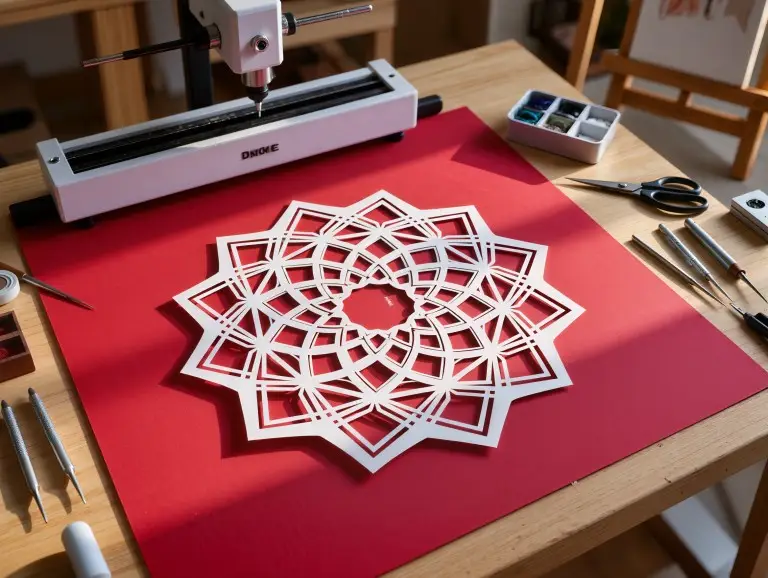
Diode lasers are compact, semiconductor-based systems for engraving and light-duty cutting. They’re ideal for hobby use, labeling, thin woods, and simple jobs where speed isn’t critical. However, they lack the power density and material versatility for thick cutting or fast production.
If your goal is revenue-generating cutting, diode lasers are more of a learning or niche tool. Their main advantage is low entry cost.
CO2 Laser
CO2 lasers use a gas laser wavelength that most non-metals absorb well, making them excellent for cutting and engraving materials like acrylic, wood, leather, fabric, and plastics. They deliver clean edges when properly tuned.
CO2 laser prices rise with tube quality, bed size, and motion stability, as these factors ensure consistent edge quality across the sheet. While CO2 lasers can cut metal in limited cases, they’re not ideal for heavy metal work due to slower speeds and higher complexity. Many shops use CO2 for non-metals and outsource metal cutting until fiber lasers become justifiable.
Fiber Laser
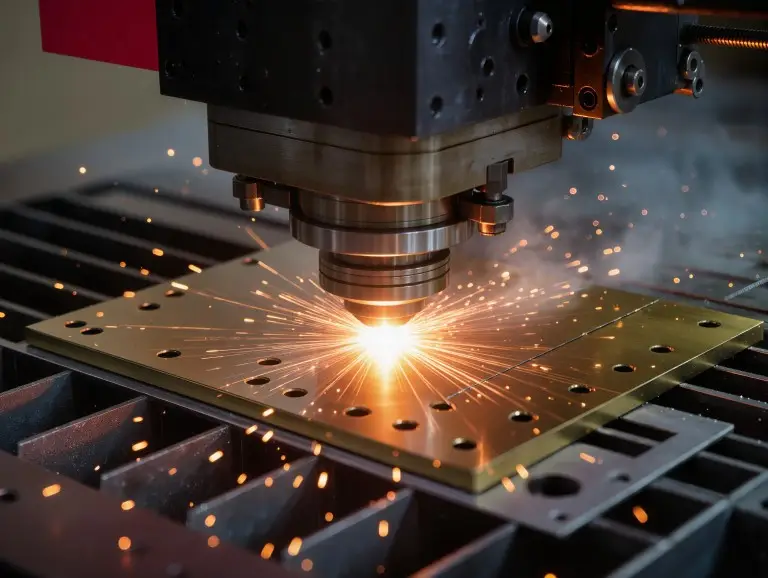
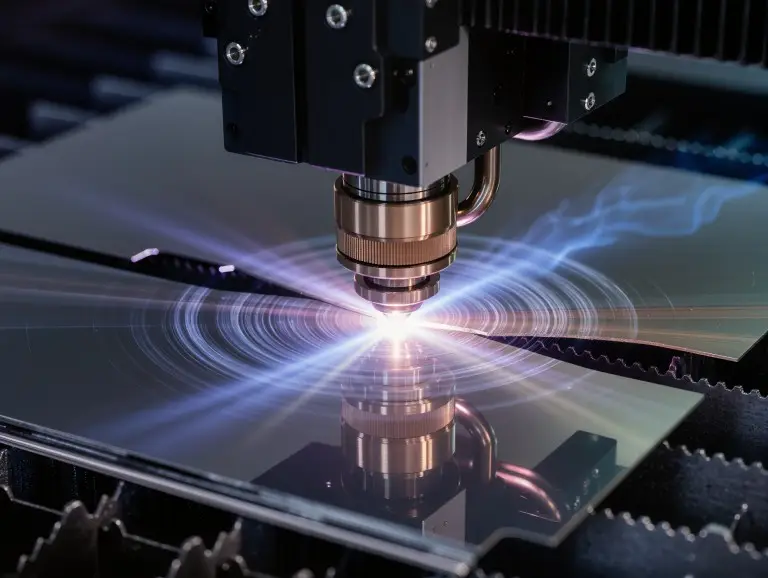
Fiber lasers are the industrial standard for metal cutting. Their wavelength couples efficiently with metals like carbon steel, stainless steel, and aluminum, making them ideal for production environments where speed and repeatability matter.
Fiber laser prices increase with industrial features like stable frames, head protection, gas delivery, and automation readiness. For multi-shift operations, higher upfront costs often pay off through reduced downtime and scrap.
YAG (Solid-State)
YAG lasers are specialized systems found in legacy setups or niche metal applications. They’re worth considering only if they offer a clear advantage, such as compatibility with specific materials or processes. For most buyers, fiber lasers are the better choice today.
Key Factors That Move the Price Up or Down
Machine prices vary based on features that impact cutting capability, repeatability, or throughput. Common cost drivers include:
- Laser type: Determines material compatibility.
- Power: Affects cutting thickness and speed.
- Cutting head quality: Features like autofocus and protection improve reliability.
- Frame stiffness and motion components: Ensure consistent quality across the bed.
- Bed size: Larger beds improve efficiency but cost more.
- Controller/software: Impacts ease of use and precision.
- Automation: Reduces handling time and increases uptime.
If a feature doesn’t improve output quality or efficiency, it’s often not worth the extra cost.
Total Cost of Ownership (TCO)
TCO includes all yearly costs to keep the machine running reliably, not just the purchase price. Two machines with similar purchase prices can have very different TCOs due to differences in gas usage, consumables, or downtime.
Recurring costs often include assist gas, optics cleaning, nozzles, dust filters, and alignment checks. To estimate TCO, separate costs into:
- Per-hour costs: Gas, consumables, and electricity.
- Scheduled costs: Filters and preventive maintenance.
Budget for stability, not just speed. A faster machine that stops frequently can cost more per finished part.
How to Choose the Right Machine for Your Budget and Workload
The best machine is the cheapest one that meets your material, thickness, and output needs with acceptable quality. Start with what you cut, then set a realistic budget.
Selection checklist:
- Material: Metals → fiber; non-metals → CO2; marking → diode.
- Thickness/speed: Higher targets need more power and frame stability.
- Bed size: Match your sheet size and nesting plan.
- Quality: Stable edges need better heads and motion systems.
- Throughput: For long hours, prioritize uptime features like automation.
Conclusion
Buying makes sense with steady volume, stable materials, and high utilization. If your work is prototype-heavy or demand fluctuates, outsourcing is often safer until demand stabilizes.
Compare “monthly ownership cost” to “monthly outsourcing spend” at the same output and quality. If ownership only works with perfect utilization, outsourcing is likely the better choice.
As a prototype manufacturer, I hope this guide helps you objectively compare machines. If purchasing a laser cutting machine feels expensive or hard to justify at your current volume, using a custom laser cutting services provider like Yonglihao Machinery can be a cost-effective alternative.
FAQ
Why does laser cutting machine price vary so much for “the same power”?
Because power alone doesn’t define cut stability or throughput. Motion stiffness, head protection, gas/extraction package, and automation often create bigger real-world differences than nameplate wattage.
Do I need a high-power machine to “save money”?
Not always—high power saves money only when you use the speed. If your jobs are thin materials or short runs, paying for unused power usually raises cost per part.
Is a used laser cutter a good deal?
It can be, if you can verify uptime history and support. Budget for inspection and potential head/optics replacement, because reliability risk is often the hidden cost.
What’s the most common budgeting mistake for fiber laser cutter price?
Underestimating operating costs, especially assist gas and extraction. These scale with hours and thickness, and they directly impact quality and uptime.
Can a CO2 laser replace a fiber laser to cut metal cheaper?
For real metal cutting, CO2 is usually the wrong tool. It may work in limited cases, but speed and process limits often erase the apparent savings.