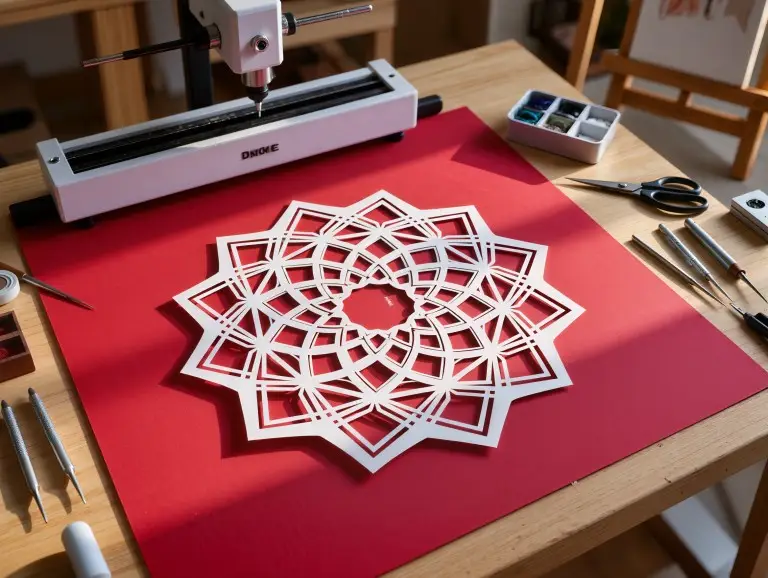
Materials cannot change their surface microstructure unless they are cutting. Laser cutting is one of the most common techniques for cutting materials for machining. It facilitates the creation of patterns in accordance with designs and desired outcomes. This method entails melting, burning, and vaporizing materials in the presence of a strong laser beam. While this process is quite useful, it is critical to grasp the numerous laser cutting benefits and drawbacks.
The cutting process is done with the help of a laser cutter. And the laser cutter uses a fine laser beam to focus on the material. However, before you begin cutting, you must have a clear aim in mind based on your designs or patterns. In the past, it was difficult to cut certain hard materials using conventional processes. However, with the arrival of a laser cutter, it has become easier.
Here, we’ll walk you through all you need to know about laser cutting. It also discusses how it works and the benefits and drawbacks of laser cutting.
What is Laser Cutting, and How Does it Work?
Many manufacturing industries now use computer numerical control machines to accelerate their production processes. These devices use a variety of process, including laser cutting services. All computer numerical control machines issue commands to machines after converting the digitalized drawing into a computer language.
This language provides the device with the instructions needed to execute the designs. The link between the language and the machine is analogous to sending a picture to a printer. Also, laser cutting machines work in the same way, and they can complete designs quickly.
The laser cutting product’s design enables for the usage of 2D vector files to guide lasers. It is composed of a laser resonator. This resonator contains glass fibers or, in certain cases, a gas mixture of crystal bodies. The material cutting procedure used by the designer determines the constituent resonator. The input of energy to the mixture will begin the cutting process. The laser is then focussed after the mixture passes through various mirror lenses.

How Does Laser Cutting Work?
Before delving into laser cutting benefits and drawbacks, it’s important to understand how it works. Laser cutting machines work similarly to CNC machines, but with a higher power laser. The laser will guide the material or beam by using CNC and optics. The gadget will cut into the material and control the movements using the given CNC or G-code.
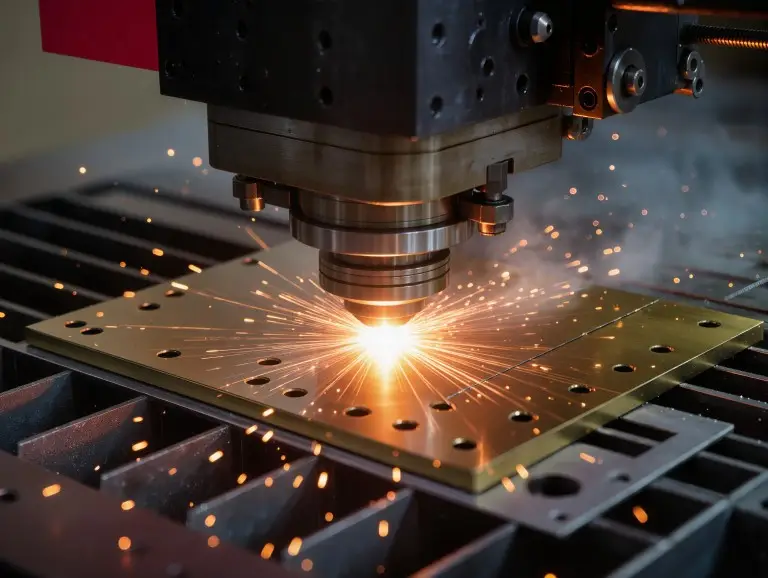
The material will melt, vaporize, and burn after the laser beam has been focused. In addition, you can achieve a high-quality finished edge surface by blowing the material with gas. The formation of a laser beam occurs in a closed container by activating lasing materials with lamps or electrical discharge.
Following an internal reflection through a partial mirror, the lasing materials are amplified. The process continues until enough energy is accumulated in the form of coherent monochromatic light. Using fiber optics or mirrors to focus on the work area improves the intensity of the light.
The diameter of a laser beam is less than 0.32 mm at its thinnest edge. In contrast, the kerf width could be as tiny as 0.10 mm. However, this is determined by the material’s thickness. If the cutting with the laser cutting machine does not begin at the material’s edge, utilize the piercing process.
The piercing procedure allows the laser to create a hole in the material with high power. For example, burning through a 13 mm stainless steel sheet takes 5 to 15 seconds.
Key Advantages of Laser Cutting
Laser cutting has real advantages. These appear when your material, thickness, and quality needs fit the process. Below, each advantage includes the “why” and the conditions that make it true.
High Precision & Narrow Kerf
Laser cutting can create very accurate contours. This is because the beam is narrow and the motion is CNC-controlled. In real shops, the achievable tolerance depends on machine class and thickness. It also depends on thermal behavior. But it is often good enough to reduce later machining on 2D profiles. This works best for parts with tight geometry, holes, and consistent edge needs.
High Speed on Thin-to-Mid Thickness
Laser cutting is fast for thin to mid-thickness materials. The process is continuous, non-contact, and highly automated. Complex shapes often cut well because the “tool” does not change. This is best for nested sheet production. Throughput matters more than deep 3D features in these cases.
Excellent Repeatability
Repeatability is a strong reason to use laser cutting in production. Once you set the parameters, the process can make parts consistently. These parameters include material, gas, focus, and speed. This is best for series production. In these jobs, identical parts must match without constant rework.
Contactless Cutting
The beam does the cutting. This means there is no cutting force from a rotating tool. There is also no tool edge to wear out. This helps when a part has delicate features or thin webs. This method is best for intricate profiles. These parts would chatter, bend, or burr with mechanical cutting.
Flexible Complexity
A laser cutter does not need a new tool for a new contour. So, complexity is mostly a programming and stability issue. This makes complex 2D profiles not automatically more expensive. This is best for frequent design changes, prototypes, and mixed-part nests.
Material Utilization
Laser cutting works well with nesting software. It often improves sheet use and reduces scrap. The savings appear when you run repeat nests. They also show up when material cost is a large part of the total cost. This is best for high-volume sheet programs and expensive materials.
Automation Potential
Laser cutting fits naturally into CNC workflows. It can integrate with loading and unloading systems. Even without full automation, it often reduces manual work. This is true compared to multi-step cutting setups. It works best for production cells focused on predictable throughput.

Key Disadvantages and Limitations
Laser cutting’s downsides are mostly about its process windows. These include thickness, heat, fumes, and sensitivity to setup. Understanding these limits helps you avoid poor quality, safety issues, and cost surprises.
Thickness & Productivity Limits
Laser cutting can cut thick metal. But productivity and edge quality usually drop as thickness increases. The practical “max thickness” is not one number. It depends on laser power, material grade, gas, and quality needs. Your operating window may be narrow if your spec demands a very clean edge on thick plate.
Heat Effects on Edges
Laser cutting is a thermal process. It can create a heat-affected zone (HAZ). It can also cause edge oxidation or discoloration. This depends on the gas and material. Dross, micro-burrs, and edge taper are common shop issues when parameters drift. If your next step is welding or coating, edge condition is not just cosmetic. It can affect performance.
Reflective/Problem Materials
Some materials are challenging. This can be due to reflectivity, conductivity, coatings, or uneven surfaces. Even if a material is “cuttable,” it may need tighter control. This applies to focus, gas, and pierce strategy. If stability is important, expect extra development time for these cases.
Fumes & Safety Requirements
Laser cutting can generate fumes and particles. Some materials, like certain plastics and coated sheets, create hazardous gases. A safe laser setup needs proper extraction and filtration. It also requires rules for materials. This is not optional. Skipping this is a fast way to turn a good process into a shop hazard.
Upfront and Operating Costs
Industrial laser cutters require a large initial investment. The operating cost is not just electricity. Assist gas use, optics maintenance, and consumables all add to the cost per part. Downtime and operator time also contribute. A service can be cost-effective if you avoid buying the equipment. But pricing can rise quickly for thick plate, strict specs, and difficult materials.
Process Sensitivity
Laser cutting is not always a “press start and walk away” job. Poor settings can cause burning, heavy dross, or rough edges. They can also create an inconsistent kerf. Operator skill is most important during piercing. It also matters when cutting thick plate or reflective materials.
When Laser Cutting Is the Right Choice?
Laser cutting is the right choice for parts with mainly 2D through-cuts. It is also right when your priorities are precision, speed, and repeatability. Use this quick checklist to decide.
- Your part is a 2D profile (sheet/plate) or tube profile. It is not for deep 3D machining.
- Edge quality and dimensional consistency are important across a batch.
- You need complex contours without special tooling.
- Material nesting and scrap reduction will greatly affect cost.
- Your material and thickness fit a stable process window for your quality needs.
If several are “No,” laser cutting may still work. But you should expect more tuning. You might also see a higher cost per part or compromises on edge appearance.
|
Issue you see |
Most common drivers |
First direction to check |
|---|---|---|
|
Heavy dross / slag on the bottom edge |
speed too low/high, gas flow/pressure off, focus position, thickness near limit |
assist gas settings, focus height, speed stability |
|
Burn marks / discoloration |
gas choice, heat input, slow corners, pierce settings |
gas type, corner handling, pierce strategy |
|
Rough striations / inconsistent kerf |
unstable cut, contamination, poor parameter window |
material surface, optics condition, parameter tuning |
Conclusion
From our view at Yonglihao Machinery, the pros and cons of laser cutting are a question of process boundaries. When the material, thickness, and edge needs match a stable window, laser cutting delivers. It offers precision, repeatability, and speed with little tooling. When you push beyond that window, the process can become costly and inconsistent. This happens with thick plate, difficult materials, or weak fume control.
If you are looking at a laser cutting service or planning your own workflow, start with the boundary conditions first. Then, optimize for speed and cost. That order prevents most problems.
FAQ
Is laser cutting always the most precise option?
No. Laser cutting is precise, but final accuracy depends on the machine, thickness, and heat effects. It can be excellent for thin-to-mid thickness profiles. But thicker plate and strict edge needs can narrow the window. Always connect “precision” to your material, thickness, and inspection method.
Why does thickness change the cutting quality so much?
Thicker material is harder to melt and clear through the kerf. As thickness increases, heat flow and gas clearing become more sensitive. This raises the risk of dross and taper. That’s why settings that look great on thin sheet can fail on thick plate.
What are the most common disadvantages in daily production?
The most common production issues are dross, edge oxidation, and parameter sensitivity. These usually trace back to gas settings, focus position, or material surface condition. Good process control solves more problems than just adding more power.
Do I really need fume extraction if I only cut metal?
Yes. Metal cutting still produces particles and fumes. Some coatings create extra hazards. Even if the gas is not highly toxic, fine particles are a health risk. They are also a housekeeping problem. Proper ventilation and filtration protect people, optics, and uptime.
When is a laser cutting service more cost-effective than buying a machine?
A service is often more cost-effective when your volume is uncertain or jobs vary widely. It lets you avoid buying equipment while you pay per job. If your work is stable, repetitive, and high-volume, owning a machine can make sense. This is true only if you can staff and maintain it.